Middle East (Journos News) – The United States has invited a growing list of countries to join President Donald Trump’s proposed “Board of Peace,” a new international body intended to oversee the next stages of governance and reconstruction in Gaza as a fragile ceasefire advances.
According to U.S. officials, the initiative includes an unusual provision: a $1 billion contribution would secure permanent membership on the board, while three-year terms would not require financial backing. The funds, officials say, would be directed toward rebuilding Gaza.
The proposal, still short on publicly released details, signals an ambitious U.S.-led effort that some diplomats see as extending beyond Gaza and potentially reshaping parts of the global conflict-resolution landscape.
At least eight additional countries have confirmed receiving invitations in recent days, bringing the total to more than a dozen. Hungary and Vietnam said they have accepted, while others are consulting internally as Washington prepares to announce the board’s initial membership.
Invitations expand across regions
Hungary’s Prime Minister Viktor Orbán has agreed to join the board, Foreign Minister Péter Szijjártó told state radio on Sunday. Orbán is among Trump’s most outspoken supporters in Europe and has maintained close political ties with the former U.S. president.

Vietnam also confirmed its acceptance. A statement from Hanoi said Communist Party chief To Lam would participate, signaling engagement from a government that typically takes a cautious approach to multilateral political initiatives beyond Southeast Asia.
India has received an invitation as well, according to a senior government official familiar with the matter, who spoke on condition of anonymity because New Delhi has not made its position public. Australia said it was invited and is reviewing the proposal. Deputy Prime Minister Richard Marles told Australian Broadcasting Corp. that Canberra would seek clarity from Washington on the board’s scope and obligations.
Jordan, Greece, Cyprus and Pakistan have also acknowledged receiving invitations. Canada, Turkey, Egypt, Paraguay, Argentina and Albania had earlier said they were contacted by the United States. Officials have not disclosed how many countries were invited in total.
The U.S. is expected to publish an official list of members in the coming days, potentially on the sidelines of the World Economic Forum meeting in Davos, Switzerland.
Paid permanent seats on Gaza peace board
A U.S. official, speaking on condition of anonymity because the board’s charter has not been released, said a $1 billion contribution would guarantee permanent membership. Countries opting for a three-year term would not be required to contribute financially.
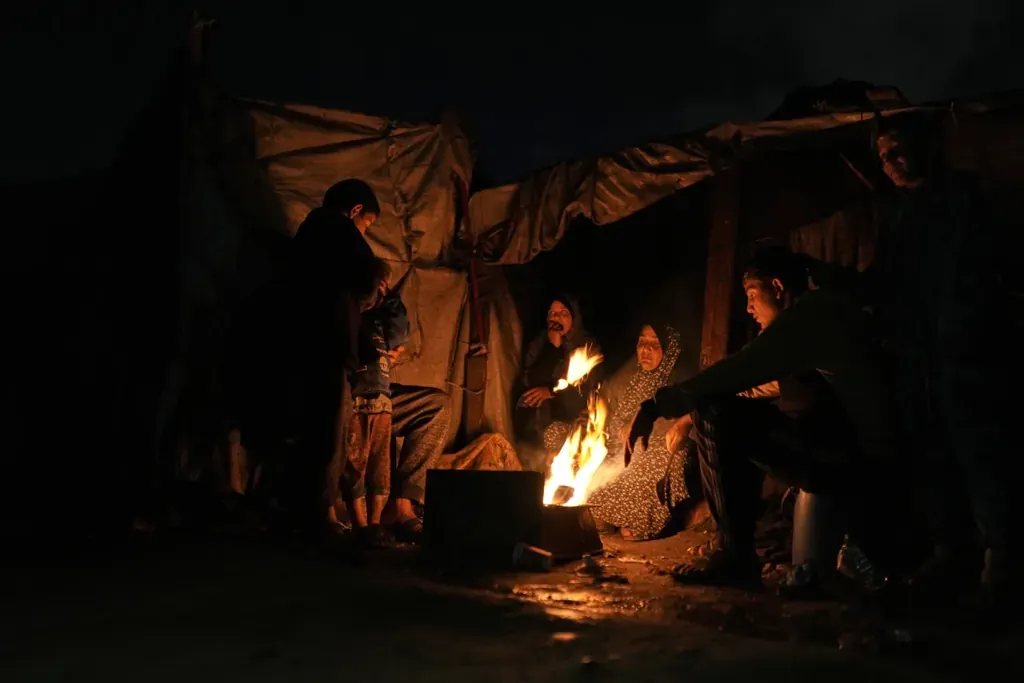
The official said the money raised through permanent seats would be earmarked for Gaza’s reconstruction following months of war that have devastated infrastructure and displaced much of the population.
The financial structure, while not unprecedented in international funds or development banks, is unusual for a political or security-oriented body and has prompted quiet questions among diplomats about governance, accountability and influence.
Mandate tied to Gaza ceasefire
According to U.S. officials and invitation letters shared publicly by some recipients, the Board of Peace would oversee the next steps in Gaza as the ceasefire that took effect on Oct. 10 moves into a more complex second phase.
Those steps include the formation of a new Palestinian administrative committee in Gaza, the deployment of an international security force, the disarmament of Hamas, and large-scale reconstruction of the territory. Each of those elements has stalled or failed in past diplomatic efforts, underscoring the challenges facing the proposed board.
In letters sent Friday inviting leaders to serve as “founding members,” Trump said the board would “embark on a bold new approach to resolving global conflict.” The language suggested ambitions that extend beyond Gaza, though no additional conflicts were specified.
Questions over role alongside the United Nations
Some diplomats and analysts see the Board of Peace as a potential rival, or at least an alternative, to the United Nations Security Council, the most powerful body within the U.N. system. The council has been repeatedly blocked by U.S. vetoes from taking binding action on Gaza, while the broader U.N. has faced funding cuts from Washington and other donors.
Trump’s invitation letters note that the Security Council endorsed the U.S. 20-point Gaza ceasefire plan, which includes the creation of the board. Supporters of the initiative argue that this gives the body a degree of international legitimacy, even if it operates outside formal U.N. structures.
Critics, however, say the lack of transparency around the board’s authority, funding mechanisms and decision-making raises concerns about duplication and fragmentation of global diplomacy.
Executive committee draws mixed reaction
The White House last week announced an executive committee that would carry out the board’s work. Its members include U.S. Secretary of State Marco Rubio, Trump’s Middle East envoy Steve Witkoff, Trump’s son-in-law Jared Kushner, former British Prime Minister Tony Blair, World Bank President Ajay Banga, and Trump’s deputy national security adviser Robert Gabriel.
The committee also includes Israeli businessman and billionaire Yakir Gabay, along with representatives from Qatar, Egypt and Turkey, countries involved in monitoring the Gaza ceasefire.
Israel publicly objected to the committee’s formation on Saturday. A statement from Prime Minister Benjamin Netanyahu’s office said the body “was not coordinated with Israel and is contrary to its policy,” without providing further detail. The criticism was notable given Israel’s traditionally close alignment with Washington.
Turkey’s inclusion is seen by some diplomats as significant. Ankara has strained relations with Israel but maintains channels with Hamas, which U.S. officials believe could be useful in persuading the group to relinquish control in Gaza and disarm.
Unanswered questions ahead
Despite the flurry of invitations, key aspects of the Board of Peace remain undefined. The U.S. has not released the full charter, explained how decisions would be enforced, or clarified how the board would interact with existing international institutions.
Several invited governments have said privately that they are weighing the political implications carefully, particularly the optics of a paid permanent seat and the risks of being drawn into an open-ended security and reconstruction mission.
As the Gaza ceasefire moves forward, the board’s credibility may hinge on whether it can translate its broad mandate into practical coordination on the ground. For now, the initiative reflects Washington’s attempt to reassert leadership on Gaza — and possibly beyond — through a new, U.S.-designed forum.
This article was rewritten by JournosNews.com based on verified reporting from trusted sources. The content has been independently reviewed, fact-checked, and edited for accuracy, neutrality, tone, and global readability in accordance with Google News and AdSense standards.
All opinions, quotes, or statements from contributors, experts, or sourced organizations do not necessarily reflect the views of JournosNews.com. JournosNews.com maintains full editorial independence from any external funders, sponsors, or organizations.
Stay informed with JournosNews.com — your trusted source for verified global reporting and in-depth analysis. Follow us on Google News, BlueSky, and X for real-time updates.