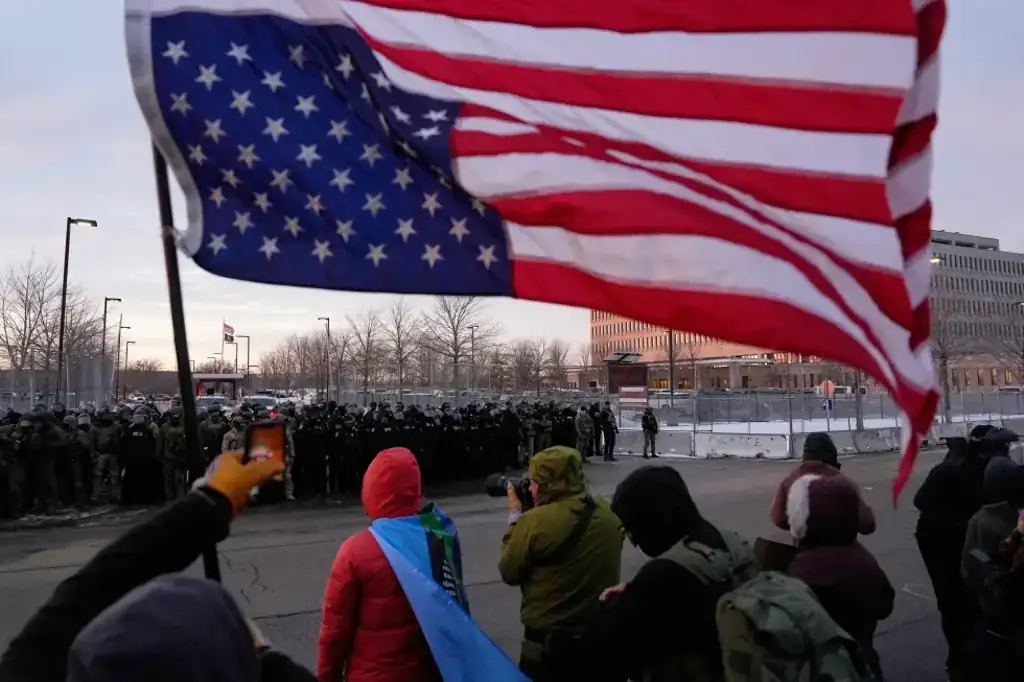
The U.S. military has placed about 1,500 active-duty Army soldiers on standby amid the possibility of a federal deployment to Minnesota, where immigration enforcement operations have sparked protests and heightened political tensions, according to U.S. defense officials.
The move underscores the administration’s willingness to consider extraordinary legal authorities to support domestic law enforcement, even as the White House signals that no immediate decision has been made. Officials stress that the orders are precautionary, but they come after President Donald Trump publicly raised the prospect of invoking the Insurrection Act, a rarely used law that allows the president to deploy federal troops within the United States.
Defense officials said two infantry battalions from the Army’s 11th Airborne Division, based in Alaska, have received “prepare-to-deploy” orders. The division is trained for rapid-response missions and specializes in operations in extreme cold-weather environments, though officials said its selection reflects readiness rather than conditions specific to Minnesota.

The officials spoke on condition of anonymity to discuss sensitive military planning.
Standby order tied to Insurrection Act authority
One defense official said the troops would deploy only if Trump formally invokes the Insurrection Act of 1807, which permits the use of active-duty forces to restore order when state authorities are deemed unable or unwilling to do so.
The law has been invoked sparingly in modern U.S. history, reflecting the longstanding norm of limiting military involvement in civilian law enforcement. Its potential use carries significant political and legal implications, particularly in situations involving protests rather than widespread armed unrest.
The Pentagon did not deny that the standby orders were issued. In an emailed statement, chief spokesman Sean Parnell said the military “is always prepared to execute the orders of the Commander-in-Chief if called upon,” without addressing the specific circumstances in Minnesota.
ABC News first reported the deployment preparations.
Immigration enforcement protests raise tensions
Federal immigration authorities have been conducting large-scale enforcement operations in Minnesota, prompting demonstrations and criticism from state and local leaders. Trump has framed the protests as threats to public order and to federal officers carrying out immigration duties.
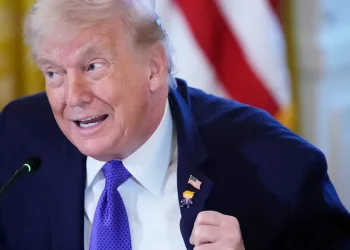
In a social media post on Thursday, the president warned that he would invoke the Insurrection Act “if the corrupt politicians of Minnesota don’t obey the law and stop the professional agitators and insurrectionists from attacking the Patriots of I.C.E., who are only trying to do their job.”
The language marked one of Trump’s most direct public references to the law during his current term. The following day, however, he appeared to soften his stance, telling reporters at the White House that there was no immediate need to invoke it.
“If I needed it, I’d use it,” Trump said. “It’s very powerful.”
The mixed messaging reflects a familiar pattern from Trump’s presidency, in which the Insurrection Act has been used rhetorically as a warning even when no formal action follows.
A history of rare and controversial use
The Insurrection Act dates back to the early 19th century and has historically been invoked during moments of severe domestic unrest. Its most recent use came in 1992, when President George H.W. Bush deployed federal troops to Los Angeles to help quell violence following the acquittal of police officers charged in the beating of Rodney King.
Trump has repeatedly threatened to use the law during both of his terms. In 2020, he raised the possibility of invoking it during nationwide protests after the killing of George Floyd by Minneapolis police, a move that drew sharp opposition from state governors and senior military leaders. More recently, he has cited immigration-related protests as a potential justification.
Legal scholars and former defense officials have noted that while the law grants broad authority, its use against civilian demonstrators carries risks of escalation and raises questions about civil-military boundaries.
Minnesota officials urge restraint
Minnesota Governor Tim Walz, a Democrat who has clashed frequently with Trump, has urged the president to avoid deploying federal troops to the state. Walz has argued that state and local authorities are capable of maintaining public order without military involvement.
“I’m making a direct appeal to the President: Let’s turn the temperature down,” Walz wrote on social media last week. “Stop this campaign of retribution. This is not who we are.”
The governor’s comments echo broader concerns among Democratic leaders that the threat of military deployment could inflame tensions rather than calm them.
No deployment decision yet
As of Sunday, there was no indication that Trump had signed an order invoking the Insurrection Act or directing troops to move into Minnesota. Defense officials emphasized that prepare-to-deploy orders are a routine part of military planning and do not guarantee that forces will be used.
Still, the decision to place active-duty soldiers on standby highlights the seriousness with which the Pentagon is treating the president’s statements and the volatility surrounding immigration enforcement operations.
Whether the situation remains a contingency plan or evolves into an unprecedented domestic deployment will depend on developments in Minnesota and the president’s next steps.
This article was rewritten by JournosNews.com based on verified reporting from trusted sources. The content has been independently reviewed, fact-checked, and edited for accuracy, neutrality, tone, and global readability in accordance with Google News and AdSense standards.
All opinions, quotes, or statements from contributors, experts, or sourced organizations do not necessarily reflect the views of JournosNews.com. JournosNews.com maintains full editorial independence from any external funders, sponsors, or organizations.
Stay informed with JournosNews.com — your trusted source for verified global reporting and in-depth analysis. Follow us on Google News, BlueSky, and X for real-time updates.