Journos News
Sunday, January 18, 2026
  • Login
  • Home
  • Breaking News
  • World News
  • Politics
  • Business
  • Conflict and Crisis
  • Sports
  • Technology
  • Entertainment
  • Health
No Result
View All Result
  • Home
  • Breaking News
  • World News
  • Politics
  • Business
  • Conflict and Crisis
  • Sports
  • Technology
  • Entertainment
  • Health
No Result
View All Result
Journos News
No Result
View All Result
Home Government and Politics

Supreme Court to Rule on Police Use of Cellphone Location Warrants

Justices will examine whether broad “geofence” searches violate Fourth Amendment privacy protections

The Daily Desk by The Daily Desk
January 18, 2026
in Government and Politics, Supreme Court & Judiciary
0
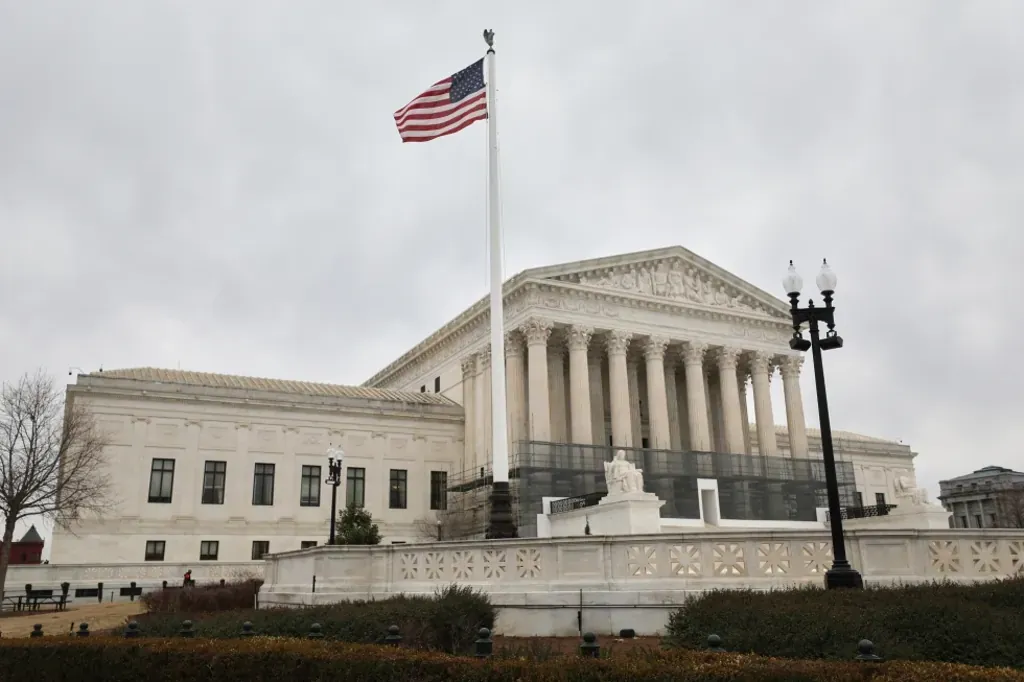
Supreme Court weighs police use of cellphone location data - AP Photo/Rahmat Gul

The U.S. Supreme Court will rule on the legality of geofence warrants. - AP Photo/Rahmat Gul

The U.S. Supreme Court has agreed to hear a closely watched case that could reshape how police use cellphone location data in criminal investigations, weighing whether warrants that sweep up the movements of large numbers of people are constitutional.

At issue is the growing use of so-called geofence warrants, which compel technology companies to turn over anonymized or identifiable location data for every device detected within a defined area and time frame. Supporters say the tool helps solve crimes with limited leads, while critics argue it risks turning routine police work into mass surveillance.

The ruling, expected later this year, could have broad implications for digital privacy, law enforcement practices, and how courts interpret the Fourth Amendment in an era where smartphones routinely log users’ movements.

Case centers on Google data and a Virginia bank robbery

The case arises from a 2019 robbery at the Call Federal Credit Union in Midlothian, a suburb of Richmond, Virginia. Investigators, lacking a suspect, sought a geofence warrant requiring Google to provide location data for devices present near the bank during the time of the crime.

Using the information produced under that warrant, police identified and later arrested Okello Chatrie. He ultimately pleaded guilty to the robbery and received a sentence of nearly 12 years in federal prison.

RELATED POSTS

Trump motorcade rerouted in Florida after suspicious object discovered

Trump signals ExxonMobil exclusion from Venezuela investment push

Anti-ICE protests spread across the U.S. after fatal shootings in Minneapolis and Oregon

Trump Signs Executive Order to Shield Venezuelan Oil Revenue From Legal Claims

Trump Debuts ‘Happy Trump’ Lapel Pin, Says He Is “Never Satisfied”

White House press secretary Karoline Leavitt announces second pregnancy

Chatrie later challenged the warrant, arguing it violated his constitutional rights by allowing police to collect location history from people near the bank without individualized suspicion. His lawyers said the search amounted to an impermissibly broad sweep that treated innocent bystanders as potential suspects.

Lower courts divided on constitutionality

A federal district judge agreed that the warrant violated the Fourth Amendment’s protection against unreasonable searches, finding it was overly broad and lacked sufficient particularity. However, the judge allowed the evidence to be used at trial, concluding that the officer who sought the warrant acted in good faith and reasonably believed the search was lawful.

The U.S. Court of Appeals for the Fourth Circuit, based in Richmond, upheld Chatrie’s conviction in a divided decision, with judges offering differing views on how existing privacy law applies to digital location data.

That ruling stands in tension with a decision from the U.S. Court of Appeals for the Fifth Circuit in New Orleans, which found that geofence warrants are unconstitutional because they effectively search the data of many people without probable cause.

The split between federal appeals courts set the stage for Supreme Court review.

Voluntary data sharing at heart of legal dispute

Prosecutors have argued that Chatrie had no reasonable expectation of privacy in his location data because he voluntarily enabled Google’s Location History feature, allowing the company to collect and store that information.

Defense lawyers counter that users do not meaningfully consent to law enforcement access to their data simply by using smartphone services, and that constitutional protections should not depend on opaque settings buried in digital platforms.

The Supreme Court has previously ruled that police generally need a warrant to obtain historical cellphone location data from wireless carriers, recognizing the sensitive nature of information that can reveal a person’s movements over time. The justices have not yet addressed whether similar protections apply to geofence warrants that initially capture data from large numbers of devices.

Broader implications for privacy and policing

Geofence warrants have become increasingly common across the United States, often used in cases ranging from robberies to serious violent crimes. Technology companies, including Google, have reported receiving thousands of such requests from law enforcement each year.

Civil liberties groups argue the practice risks chilling everyday activities by placing people under potential surveillance simply for being in the wrong place at the wrong time. Law enforcement agencies respond that geofence warrants are often a last resort and can be refined to narrow the pool of data reviewed.

The Supreme Court’s decision could clarify how traditional constitutional standards apply to digital evidence generated by modern devices, potentially setting limits on how broadly police can search location databases.

Timing and next steps

The case is expected to be argued either later this spring or in October, when the court begins its next term. A decision would likely come by mid-2026.

Whatever the outcome, legal analysts say the ruling is likely to influence future investigations, technology company policies, and the evolving balance between privacy rights and public safety in the digital age.

Follow JournosNews.com for professionally verified reporting and expert analysis across world events, business, politics, technology, culture, and health — your reliable source for neutral, accurate journalism.
Source: AP News – Supreme Court will decide on use of warrants that collect the location history of cellphone users

This article was rewritten by JournosNews.com based on verified reporting from trusted sources. The content has been independently reviewed, fact-checked, and edited for accuracy, neutrality, tone, and global readability in accordance with Google News and AdSense standards.

All opinions, quotes, or statements from contributors, experts, or sourced organizations do not necessarily reflect the views of JournosNews.com. JournosNews.com maintains full editorial independence from any external funders, sponsors, or organizations.

Stay informed with JournosNews.com — your trusted source for verified global reporting and in-depth analysis. Follow us on Google News, BlueSky, and X for real-time updates.
Tags: #CivilLiberties#Courts#DigitalPrivacy#FourthAmendment#GeofenceWarrants#LawEnforcement#MobileData#PrivacyRights#SupremeCourt#Surveillance#TechnologyLaw#USLaw
ShareTweetSend
The Daily Desk

The Daily Desk

The Daily Desk – Contributor, JournosNews.com, The Daily Desk is a freelance editor and contributor at JournosNews.com, covering politics, media, and the evolving dynamics of public discourse. With over a decade of experience in digital journalism, Jordan brings clarity, accuracy, and insight to every story.

Related Posts

Trump motorcade escorted by police near Palm Beach airport - AP Photo/Julia Demaree Nikhinson
Government and Politics

Trump motorcade rerouted in Florida after suspicious object discovered

January 12, 2026
Trump speaking aboard Air Force One on Venezuela oil policy - AP Photo/Julia Demaree Nikhinson
Government and Politics

Trump signals ExxonMobil exclusion from Venezuela investment push

January 12, 2026
Protesters march in Minneapolis against ICE after fatal shooting - AP Photo/Jose Luis Magana
Government and Politics

Anti-ICE protests spread across the U.S. after fatal shootings in Minneapolis and Oregon

January 11, 2026
Trump signing executive order on Venezuelan oil revenue - AP Photo/Alex Brandon
Foreign Policy

Trump Signs Executive Order to Shield Venezuelan Oil Revenue From Legal Claims

January 11, 2026
Donald Trump wearing Happy Trump lapel pin at White House event - AP Photo/Alex Brandon
Government and Politics

Trump Debuts ‘Happy Trump’ Lapel Pin, Says He Is “Never Satisfied”

January 10, 2026
White House press secretary Karoline Leavitt announces pregnancy - Jim Watson/AFP via Getty Images/ABC News
Government and Politics

White House press secretary Karoline Leavitt announces second pregnancy

December 27, 2025
State attorneys general file lawsuit over CFPB funding dispute - AP Photo/Jacquelyn Martin
Government and Politics

Democratic-led states challenge White House over Consumer Financial Protection Bureau funding

December 23, 2025
Exterior of Kennedy Center amid Trump Kennedy Center renaming debate - AP Photo/Rahmat Gul
Government and Politics

Trump-aligned board votes to rename Kennedy Center, prompting legal and political backlash

December 19, 2025
Donald Trump speaking as BBC headquarters appears in background - AP Photo/Alex Brandon
Government and Politics

Trump Sues BBC for $10 Billion Over Edited January 6 Speech

December 16, 2025
Load More
Next Post
Delcy Rodríguez speaking at a government event in Caracas - AP Photo/Ariana Cubillos

Delcy Rodríguez long on U.S. drug agency radar, documents show

Trump speaks as Greenland and European flags appear behind him - AP Photo/Evgeniy Maloletka

Trump threatens 10% tariffs on eight European nations over Greenland dispute

EU and Mercosur leaders at free trade agreement signing ceremony - AP Photo/Jorge Saenz

European Union and Mercosur Sign Long-Awaited Free Trade Agreement

JournosNews logo

Journos News delivers globally neutral, fact-based journalism that meets international media standards — clear, credible, and made for a connected world.

  • Categories
  • World News
  • Politics
  • Business & Economy
  • Conflict and Crisis
  • Sports
  • Technology
  • Entertainment
  • Science & Health
  • Lifestyle & Culture
  • Investigations & Watchdog
  • Resources
  • Submit a Story
  • Advertise with Us
  • Syndication & Partnerships
  • Site Map
  • Press & Media Kit
  • Editorial Team
  • Careers
  • AI Use Policy

Join thousands of readers receiving the latest updates, tips, and exclusive insights straight to their inbox. Never miss an important story again.

  • About Us
  • Accessibility Statement
  • Contact Us
  • Privacy Policy
  • Terms and Conditions

© JournosNews.com – Trusted source for breaking news, trending stories, and in-depth reports.
All rights reserved.

Welcome Back!

Login to your account below

Forgotten Password?

Retrieve your password

Please enter your username or email address to reset your password.

Log In
No Result
View All Result
  • Home
  • Breaking News
  • World News
  • Politics
  • Business
  • Conflict and Crisis
  • Sports
  • Technology
  • Entertainment
  • Health

© JournosNews.com – Trusted source for breaking news, trending stories, and in-depth reports.
All rights reserved.

This website uses cookies. By continuing to use this website you are giving consent to cookies being used. Visit our Privacy and Cookie Policy.