SEOUL, South Korea (Journos News ) – North Korean leader Kim Jong Un has warned that his country could “completely destroy” South Korea if provoked, reiterating that Pyongyang sees Seoul as a hostile state. Yet in remarks closing a major ruling party congress, Kim suggested dialogue with the United States remains possible if Washington changes what he calls its “hostile” approach.
North Korea’s latest political gathering has underscored the dual track that defines Kim’s current strategy: uncompromising rhetoric toward Seoul and conditional openness toward Washington. The message, delivered through state media, highlights how Pyongyang is seeking to reinforce its nuclear credentials while preserving diplomatic flexibility at a time of shifting regional dynamics.
The comments were reported by the state-run Korean Central News Agency at the conclusion of a congress of the ruling Workers’ Party, which set policy priorities for the next five years. As in previous party meetings, military modernization featured prominently.

Kim hardens tone toward South Korea
According to KCNA, Kim declared that North Korea could “completely destroy” South Korea if its security were threatened. He repeated his refusal to engage in inter-Korean dialogue and insisted there was “absolutely nothing to discuss” with what he described as an enemy state.
In recent years, Kim has abandoned Pyongyang’s longstanding rhetorical commitment to peaceful reunification. In 2024, he formally defined South Korea as a permanent adversary, a shift analysts say reflects frustration with stalled diplomacy and a belief that Seoul no longer serves as a useful intermediary with Washington.
At the congress, Kim criticized calls for engagement from South Korean President Lee Jae Myung, dismissing them as deceptive. South Korea’s Unification Ministry responded by expressing regret that the North continues to characterize inter-Korean relations as hostile and said Seoul would continue efforts to stabilize peace on the peninsula.
Despite the harsh language, many analysts view the rhetoric as calibrated rather than a prelude to imminent conflict. They argue it is designed to reinforce domestic unity and bolster North Korea’s deterrence posture, rather than signal immediate military escalation.
Conditional opening to Washington
While striking a confrontational tone toward Seoul, Kim left room for possible talks with the United States. He said there was “no reason we cannot get along” with Americans if Washington abandons what Pyongyang calls its “hostile policy” — a term North Korea commonly uses to describe U.S.-led sanctions and joint military exercises with South Korea.
■ Related News


“The prospects of U.S.-North Korea relations depend entirely on the U.S. attitude,” Kim was quoted as saying. “Whether it’s peaceful coexistence or permanent confrontation, we are ready for either.”
Diplomacy between Pyongyang and Washington has been stalled since 2019, when Kim’s second summit with then–U.S. President Donald Trump collapsed without agreement. Since then, North Korea has rejected U.S. and South Korean calls to resume talks aimed at curbing its nuclear program.
Analysts have long suggested that Pyongyang seeks sanctions relief and tacit recognition as a nuclear weapons state. By softening his message toward Washington while escalating rhetoric toward Seoul, Kim may be attempting to keep diplomatic options open without appearing conciliatory at home.
Military parade and symbolic messaging
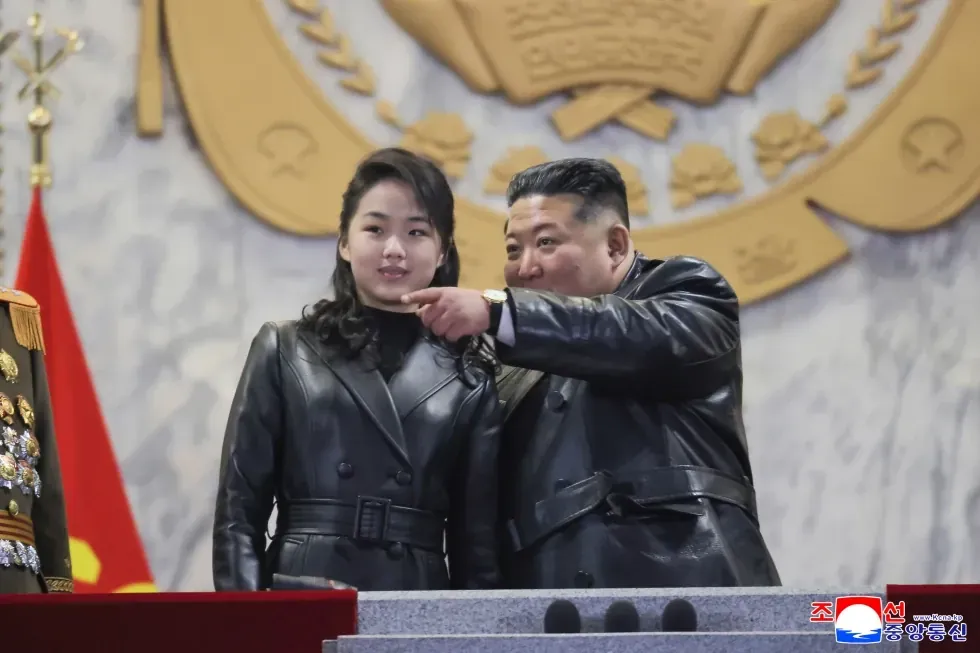
Kim concluded the congress with a nighttime military parade in Pyongyang’s central square, sharing the stage with his daughter, widely believed to be Kim Ju Ae. The two appeared together in matching dark leather coats, observing formations and aerial flyovers.
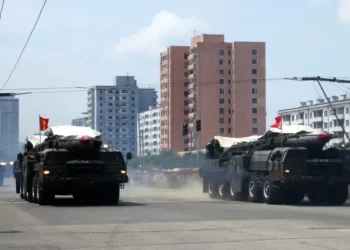
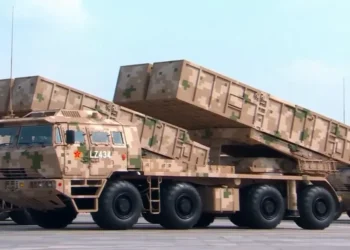
The parade took place in Kim Il Sung Square, named after the country’s founding leader and Kim’s grandfather. State media images showed conventional forces and various missile systems, but notably did not display the country’s largest intercontinental ballistic missiles (ICBMs), which are theoretically capable of reaching the U.S. mainland.
The absence of those systems has prompted speculation that Pyongyang sought to avoid directly antagonizing Washington while signaling strength to domestic and regional audiences. North Korea has previously showcased solid-fuel ICBMs and other advanced systems in large-scale parades.
Expanding nuclear and advanced weapons programs
At the congress, Kim declared that the accelerated development of North Korea’s nuclear and missile capabilities in recent years had “permanently cemented” its status as a nuclear weapons state. He set out plans to further strengthen that arsenal over the next five years.
Among the goals outlined were the development of intercontinental ballistic missiles capable of being launched from underwater platforms, potentially to be deployed on a nuclear-powered submarine that Pyongyang says it is building. Kim also called for faster production of nuclear warheads and a wider array of delivery systems, including tactical nuclear weapons such as artillery and short-range missiles aimed at South Korea.
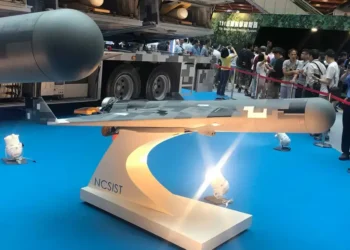
In addition, he cited ambitions to develop artificial intelligence–equipped attack drones, enhance electronic warfare capabilities to disrupt enemy command systems, expand reconnaissance satellite networks, and create weapons designed to strike enemy satellites.
North Korea has made steady progress in recent years, testing solid-fuel ICBMs, tactical nuclear systems and what it has described as hypersonic missiles. It successfully launched its first military reconnaissance satellite in 2023, marking another step in its effort to enhance surveillance and targeting capabilities.
Kim also signaled that nuclear-capable artillery deployments near the inter-Korean border would increase annually, alongside efforts to further fortify frontier defenses.
Regional recalibration
Kim’s latest messaging comes amid closer ties with Russia and sustained, though cautious, engagement with China. North Korea has reportedly provided troops and military equipment to support Moscow’s war in Ukraine, a move widely seen as a bid to secure economic aid and advanced military technology in return.
At the same time, keeping channels open to Washington could provide leverage should the geopolitical landscape shift. With U.S.-North Korea diplomacy frozen and sanctions firmly in place, Pyongyang appears to be balancing confrontation with conditional outreach.
For now, the outcome hinges on whether either side sees value in returning to talks. As Kim framed it, the next step rests with Washington — even as North Korea presses ahead with an ambitious military buildup.
Source: AP News – North Korea warns it could destroy South if threatened, but leaves door open for US dialogue