KABUL, Afghanistan (Journos News) – The fragile ceasefire between Afghanistan and Pakistan appeared increasingly strained Friday after Pakistan launched airstrikes in Kabul and two other Afghan provinces, hours after Afghan forces carried out cross-border attacks into Pakistani territory.
The renewed fighting marks one of the most serious escalations in months between the neighboring countries, whose 2,611-kilometer frontier — known as the Durand Line — remains a source of longstanding dispute. Both governments accuse the other of provocation, while casualty figures differ sharply, underscoring the difficulty of independently verifying events on the ground.
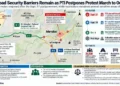
Afghanistan’s government said explosions were heard in the capital early Friday, along with reported strikes in Kandahar and Paktia provinces. Pakistani officials confirmed military action but described it as a response to what they called unprovoked Afghan attacks late Thursday.

Airstrikes reported in Kabul, Kandahar and Paktia
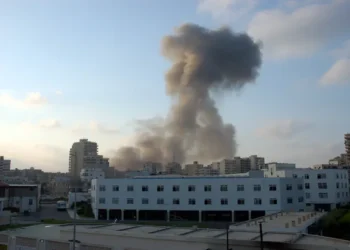
Afghan government spokesperson Zabihullah Mujahid said at least three explosions were heard in Kabul. There was no immediate confirmation of the exact locations or casualties in the capital.
Two senior Pakistani security officials, speaking on condition of anonymity because they were not authorized to brief the media, told The Associated Press that Pakistan’s military targeted Afghan military facilities in Kabul, Kandahar and Paktia. They alleged that two brigade bases were destroyed but did not provide casualty figures.
The escalation followed Afghan cross-border operations late Thursday that Kabul described as retaliation for Pakistani airstrikes earlier in the week. Afghan authorities claimed their forces had captured more than a dozen Pakistani army posts along the border.
Islamabad rejected those claims. Pakistan’s Information Minister Attaullah Tarar said the Afghan attack was unprovoked and denied that any army positions had been seized.
The conflicting accounts reflect the deep mistrust that has characterized relations between the two sides, particularly over security issues linked to militant groups operating near the frontier.
Afghan strikes described as retaliation
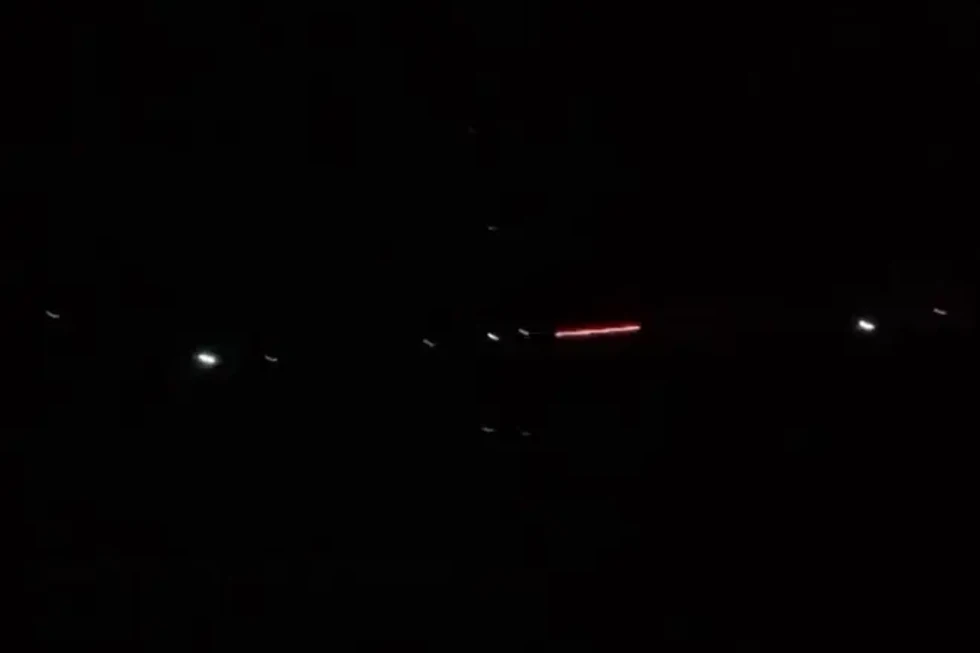
In a statement posted on X, Mujahid said Afghan forces had launched “large-scale offensive operations” against Pakistani military bases and installations along the Durand Line. Afghanistan has never formally recognized the border drawn during British colonial rule.
Afghanistan’s Defense Ministry said operations occurred across six border provinces and lasted roughly four hours before ending around midnight. It claimed 55 Pakistani soldiers were killed and several others captured, while eight Afghan personnel were killed and 11 wounded.
Pakistan presented far lower figures. Tarar said two Pakistani soldiers were killed and three wounded, and that 36 Afghan fighters had died. Mosharraf Ali Zaidi, spokesperson for Prime Minister Shehbaz Sharif, later posted that at least 133 Afghan fighters were killed and more than 200 wounded, and denied any Pakistani soldiers had been captured.
Such wide discrepancies are common in cross-border clashes where independent access is limited. No third-party verification of the casualty claims was immediately available.
Refugee camp and border communities affected
Both sides reported exchanges of fire near the Torkham border crossing, one of the busiest transit points between the two countries.
Afghan officials said a missile strike wounded 13 civilians at a refugee camp near Torkham, including women and children. Authorities began evacuating the camp after several refugees were injured, according to local officials.
On the Pakistani side, police said residents in nearby villages were relocating to safer areas. Some Afghan refugees waiting to cross back into Afghanistan were also moved. Pakistan has been carrying out a large-scale migrant crackdown since October 2023, expelling hundreds of thousands of Afghans.
Pakistani police said mortars fired from Afghanistan landed in nearby villages but reported no civilian casualties.
The United Nations called for restraint. A spokesperson for U.N. Secretary-General António Guterres said he urged both sides to protect civilians under international law and to resolve differences through diplomacy.
Months of mounting tension
The latest violence follows months of heightened friction along the border. Deadly clashes in October killed dozens of soldiers, civilians and suspected militants. Pakistan has accused Afghanistan of failing to curb militant activity, particularly by the Tehrik-e-Taliban Pakistan (TTP), which Islamabad says operates from Afghan territory.
The TTP is distinct from Afghanistan’s Taliban government but is widely seen as closely aligned with it. Kabul has denied that the group uses Afghan soil to stage attacks in Pakistan.
Earlier this week, Pakistan conducted strikes along the border, saying it killed at least 70 militants. Afghan authorities rejected that claim, saying the attacks hit civilian areas, including homes and a religious school, and killed dozens of civilians. Kabul described those strikes as violations of its sovereignty.
A ceasefire brokered by Qatar had largely reduced hostilities in recent months, though sporadic exchanges of fire continued. Several rounds of talks in November failed to produce a formal peace agreement.
The renewed strikes in Kabul and along the border suggest that the ceasefire framework is under significant strain. For residents on both sides of the Durand Line, the immediate concern remains safety, as communities brace for the possibility of further escalation.
With sharply differing casualty claims and rising rhetoric from both capitals, diplomatic efforts may face renewed urgency in the days ahead.
Source: AP News – Airstrikes hit Afghan capital of Kabul, hours after Afghanistan attacks Pakistan