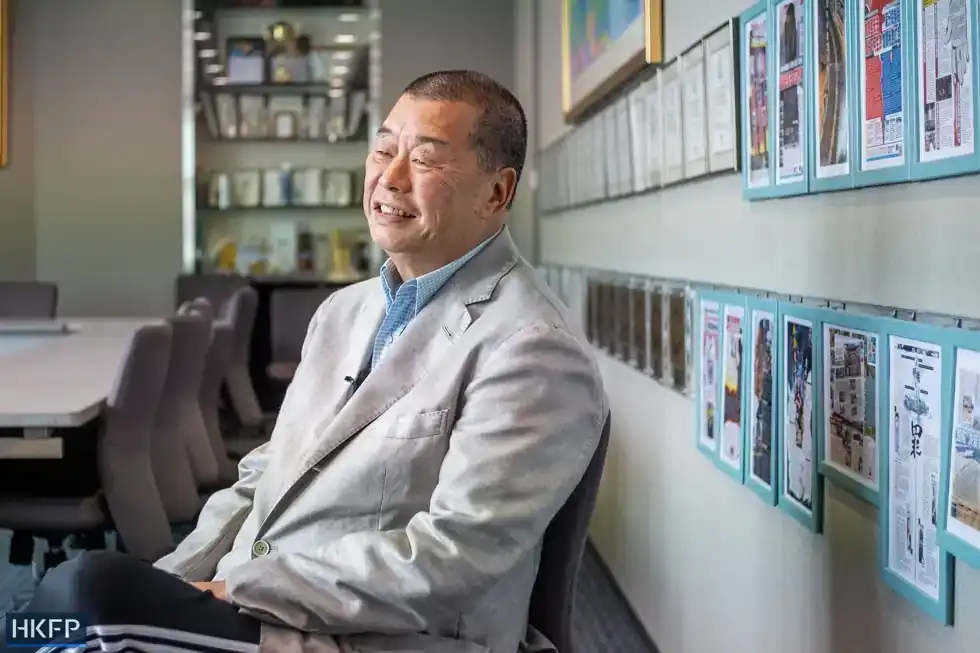
HONG KONG (Journos News) – Jimmy Lai, the 78-year-old founder of the now-defunct newspaper Apple Daily, has been convicted in a landmark national security case that underscores the far-reaching impact of Hong Kong’s Beijing-imposed security law. The ruling, delivered Monday by a panel of three judges, could see the veteran publisher spend the rest of his life in prison.
The Jimmy Lai national security trial has become one of the most closely watched legal proceedings in Hong Kong since the territory’s return to Chinese rule in 1997. Diplomats, media groups and human rights advocates say the case carries implications not only for Lai personally, but also for press freedom and the autonomy once promised to the city.
Lai pleaded not guilty to charges of conspiring to collude with foreign forces and conspiring to publish seditious materials. After a 156-day trial without a jury, three government-approved judges found him guilty on both counts.

Court says Lai sought foreign intervention
Reading from an 855-page judgment, Judge Esther Toh said the court was satisfied that Lai had, over several years, extended what she described as a “constant invitation” to the United States to take action against Beijing under the pretext of supporting Hong Kong’s freedoms.
The judges concluded that Lai’s conduct — both before and after the national security law took effect in June 2020 — demonstrated a consistent intent to undermine China’s ruling Communist Party. They described him as the “mastermind” behind the conspiracies and ruled that his testimony was at times contradictory and unreliable.
Prosecutors pointed to Lai’s meetings in July 2019 with former U.S. Vice President Mike Pence and former Secretary of State Mike Pompeo during the height of Hong Kong’s anti-government protests. They argued that such contacts formed part of a broader effort to solicit sanctions or hostile actions against Hong Kong and mainland China.
Lai’s legal team acknowledged he had called for foreign sanctions prior to the security law’s enactment but argued he ceased such advocacy afterward to comply with the legislation. The court rejected that argument, finding he had continued to promote similar aims in less explicit ways.
International scrutiny and diplomatic strain
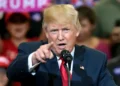
The Jimmy Lai national security trial has drawn strong reactions from Western governments. U.S. President Donald Trump said he felt “so badly” about the outcome, having previously raised Lai’s case with Chinese officials. British Prime Minister Keir Starmer reiterated that securing Lai’s release remains a priority for London; Lai holds British citizenship.


U.S. Secretary of State Marco Rubio said the verdict illustrated how Beijing’s national security law is being used to silence dissent. U.K. Foreign Secretary Yvette Cooper condemned what she described as a politically motivated prosecution, and Britain’s Foreign Office summoned the Chinese ambassador to express objections.
The European Union also deplored the conviction.
In Beijing, Foreign Ministry spokesperson Guo Jiakun defended the proceedings and urged foreign governments to respect Hong Kong’s judicial system, saying China firmly opposed what he called the vilification of the city’s courts by “certain countries.”
The case has emerged as a diplomatic touchpoint in relations between China and several Western nations, reflecting broader tensions over Hong Kong’s governance since the 2019 protests.
Apple Daily’s closure and wider context
Lai founded Apple Daily in 1995, building it into one of Hong Kong’s most widely read and outspoken pro-democracy newspapers. The publication was a vocal critic of both the Hong Kong government and Beijing.
In 2021, authorities raided the newspaper’s newsroom, arrested senior editors and froze company assets. Apple Daily was forced to shut down shortly thereafter. The closure marked a turning point for Hong Kong’s once-vibrant media landscape and was widely cited by press freedom groups as evidence of a narrowing space for dissent.
Rights organizations, including Reporters Without Borders, said the conviction sends a chilling signal for journalists operating in the city. Hong Kong’s Secretary for Security, Chris Tang, rejected those assertions, stating that the verdict had nothing to do with press freedom and was solely about national security.
Health concerns during prolonged detention
Lai was first arrested in August 2020 and has spent five years in custody, much of it reportedly in solitary confinement. During the lengthy proceedings, his family raised repeated concerns about his health.
His lawyers told the court in August that he had suffered heart palpitations. Family members said he lost significant weight over the past year and experienced infections, back pain and complications linked to diabetes and high blood pressure.
Hong Kong authorities said medical examinations found no abnormalities and maintained that the care provided to Lai in custody has been appropriate.
Outside the courthouse, dozens of residents queued before sunrise in hopes of securing seats for the verdict. Among them was a former Apple Daily employee who said she wanted clarity about Lai’s condition and expressed relief that the prolonged case was nearing conclusion.
Sentencing to follow
Lai faces up to life imprisonment. Sentencing will take place at a later date, with hearings scheduled to begin on Jan. 12 to consider arguments for mitigation.
The Jimmy Lai national security trial stands as one of the most consequential prosecutions under the 2020 law, enacted by Beijing following months of mass protests in Hong Kong. For supporters, the case reinforces concerns about judicial independence and the erosion of civil liberties. For Hong Kong authorities and Beijing, it represents enforcement of a law they say is essential for restoring stability.
As the legal process moves toward sentencing, the outcome continues to reverberate far beyond the courtroom, shaping perceptions of Hong Kong’s future as an international city governed under Chinese sovereignty.
Source: AP News – Former Hong Kong pro-democracy media mogul Jimmy Lai convicted in landmark national security trial