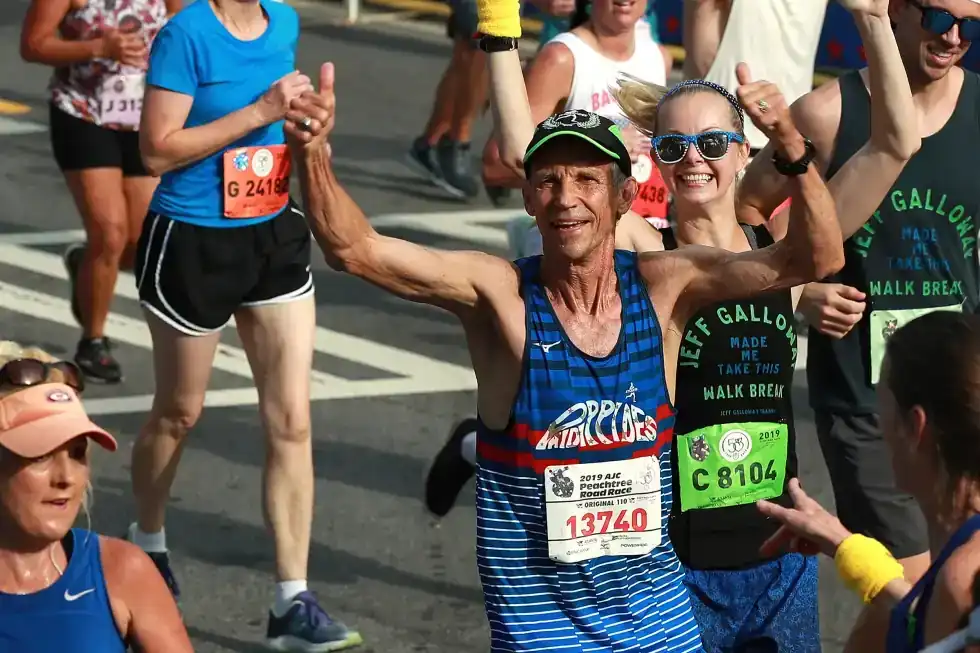
Jeff Galloway, the former U.S. Olympian who reshaped distance running with his widely adopted run-walk method, has died at the age of 80. Best known for helping everyday runners complete marathons alongside elite athletes, Galloway built a philosophy that emphasized endurance, injury prevention and confidence over speed alone.
Galloway died Wednesday at a hospital in Pensacola, Florida, after suffering a hemorrhagic stroke, according to his daughter-in-law, Carissa Galloway. His passing prompted tributes from runners around the world, many of whom credited him with transforming their relationship with the sport.
The outpouring of gratitude in his final days underscored his enduring influence. Videos posted online showed runners thanking him for guidance that helped them reach starting lines they once thought were beyond reach.

From Olympic Track to Everyday Runners
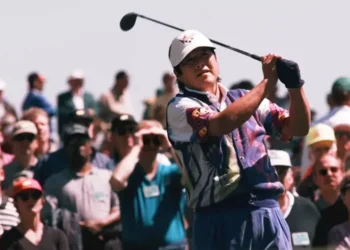
A member of the U.S. team at the 1972 Summer Olympics in Munich, Galloway competed in the 10,000 meters at a time when competitive distance running was largely reserved for elite athletes. But his long-term legacy would be built far from the Olympic stadium.
In 1974, two years after the Games, Galloway began teaching a running class through Florida State University. The class was partly intended to draw customers to Phidippides, his new specialty running store. Most participants had not run in years. Instead of pushing them through traditional training, he introduced structured walk breaks between short jogging intervals.
The approach evolved into what he later branded the “run-walk-run” method. The core principle was simple: strategic walk breaks reduce fatigue, lower injury risk and allow runners to maintain a steady pace over long distances. By removing the expectation that a runner must run continuously, he dismantled what many coaches described as the sport’s biggest psychological barrier.
Jim Vance, an endurance sports consultant based in San Diego, described Galloway as a pioneer who reframed running as accessible rather than punishing. He told The Associated Press that Galloway removed the mental hurdle that discouraged many beginners from participating.
A Philosophy Backed by Practice
Galloway’s own racing supported his theory. During the 1980 Houston Marathon, he walked through every water station and finished in 2 hours, 16 minutes and 35 seconds — faster than some of his earlier run-only marathon performances, according to The New York Times. For him, walk breaks were not a concession but a strategy.
■ Related News



Over the decades, he refined running-to-walking ratios based on pace and individual needs. He published books, hosted retreats and maintained an active online presence, building a global following that ranged from first-time 5K runners to seasoned marathoners.
He also served as the official training consultant for runDisney, the race series organized by The Walt Disney Company at its resort destinations. At those events, participants frequently encountered Galloway running alongside them — reinforcing his belief that coaching required presence, not just instruction.
Even after surviving heart failure in 2021, Galloway continued to set ambitious goals. In an interview with The New York Times in December, he said his mission in his 80s was to demonstrate that people could safely achieve milestones typically considered out of reach.
Expanding the Running Community
Galloway’s impact was measurable not just in finish times but in participation. Running boomed in the United States in the late 20th century, and inclusive training philosophies like his broadened the demographic profile of race entrants. His method appealed particularly to older runners and those returning to exercise after long breaks.
Karen Bock-Losee of Jacksonville, Florida, was among those who publicly credited Galloway with helping her begin running later in life. In an online tribute, she said she had completed multiple half marathons after discovering his approach at age 60.
Susan Williams recalled struggling near the end of a half marathon in Murray, Kentucky, in 2011 when Galloway turned back mid-race to encourage her. The story echoed a recurring theme in testimonials: accessibility combined with personal engagement.
Bobby McGee, a Colorado-based running coach, said the run-walk-run approach democratized the sport. After races, he noted, runners typically discuss their finishing times — not whether they ran continuously. In that sense, Galloway helped shift the metric of success from purity to completion.
Lasting Influence in Distance Running
While elite marathoners continue to compete at ever faster speeds, Galloway’s philosophy endures in community training programs and beginner clinics worldwide. Many modern coaching platforms incorporate structured walk breaks, a concept once dismissed by purists but now widely accepted.
His method also aligned with evolving sports science emphasizing injury prevention, sustainability and individualized pacing. By framing walk breaks as tactical rather than symbolic of weakness, he altered perceptions of endurance training.
Galloway is survived by two sons and six grandchildren. His family announced his emergency neurosurgery on Feb. 20 and invited public support — a gesture that revealed the scale of his global network.
In a sport often defined by personal limits, Jeff Galloway’s lasting contribution was to widen the path.
Source: AP News – Jeff Galloway, who inspired people with his run-walk method, dies at 80