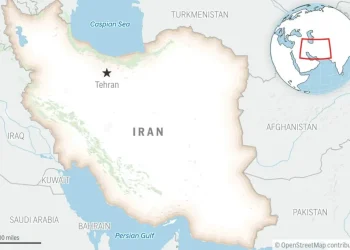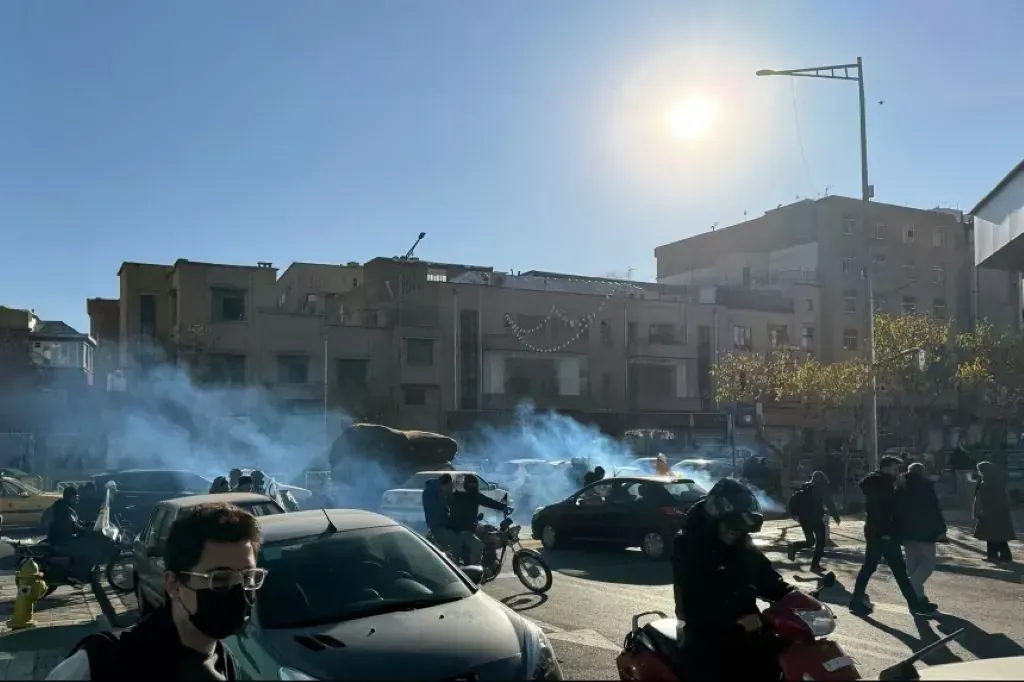
Iran is facing renewed protests driven by economic hardship and long-standing political disillusionment, raising fresh questions about the state’s ability to contain public anger. While the authorities insist they can distinguish between lawful protest and unrest, the latest demonstrations suggest pressures that go beyond familiar cycles of dissent and repression.
A familiar pattern under strain
For many Iranians, the sequence has become grimly predictable: protests erupt over living standards or political grievances, security forces respond with force, and public life retreats into uneasy calm. That pattern has repeated itself across the past decade, reflecting a system widely seen as resistant to reform and unable to deliver sustained economic relief.
Years of sanctions, persistent mismanagement, and corruption have left the economy struggling to generate jobs or curb inflation. These pressures have repeatedly brought people onto the streets, from fuel price protests in 2019 to the nationwide demonstrations in 2022 following the death of Mahsa Amini while in morality police custody. That episode, in particular, produced visible social change and emboldened new forms of dissent, even as the state ultimately reasserted control.

The latest protests are smaller in scale than those earlier movements but carry echoes of deeper frustration. Demonstrators have again pointed to rising prices, unemployment, and the sense that political avenues for change remain closed.
Leadership response and warnings
On Friday, Supreme Leader Ayatollah Ali Khamenei, now 86 and in power for more than three decades, addressed the unrest. He acknowledged economic grievances but drew a firm distinction between what he described as legitimate protest and acts he labelled as rioting orchestrated by hostile forces.
Such language is familiar to Iranians, and it signals the leadership’s readiness to respond forcefully if demonstrations expand. Security agencies have historically relied on arrests, internet restrictions, and a visible presence on the streets to deter sustained mobilisation.
Yet analysts and activists say the social context has shifted. Younger Iranians, in particular, have grown up amid repeated crises and appear less willing to accept official narratives that blame foreign enemies alone for domestic failures.
After regional tensions, expectations fade
The protests come against the backdrop of heightened regional tension involving Iran and its adversaries, which briefly stirred nationalist sentiment at home. Some Iranians had hoped that the leadership might use that moment to recalibrate its relationship with society, easing social restrictions or offering credible economic reforms.
Those expectations quickly faded. Daily life returned to familiar constraints, dissent remained tightly controlled, and the gap between rulers and ruled appeared to widen once more. For critics, the return to business as usual reinforced the belief that the system lacks both the will and the capacity to change course.
Exiled opposition and shifting slogans
One notable feature of the current unrest is the renewed visibility of Reza Pahlavi, the son of Iran’s last shah, who lives in exile. While he has long been a polarising figure, videos circulating on social media in recent days have shown protesters chanting slogans supportive of a return to monarchy.
Such chants were rare during earlier protest waves, which tended to focus on economic demands or calls for reform within the existing system. Their appearance now suggests that some demonstrators are willing to question the foundations of the Islamic Republic more openly.
Pahlavi has urged Iranians to continue protesting and has publicly thanked those who have taken to the streets. Supporters describe him as a unifying figure, while critics argue that monarchist nostalgia has limited appeal inside a diverse and politically fragmented society.
There is no clear evidence that his influence extends beyond pockets of demonstrators, and the movement lacks the organisational breadth seen during the 2009 Green Movement or the 2022 protests. Still, the symbolism of such slogans marks a shift in tone.
Iran protests and political dissent
This shift matters because it moves parts of the protest narrative beyond economic grievance toward explicit challenges to the political system. For the authorities, that distinction has often determined how harshly they respond.
International calculations
Iran’s leadership is also watching reactions abroad. U.S. President Donald Trump has warned Tehran against violent repression, comments Iranian officials have dismissed as interference in internal affairs. Even so, officials in Tehran are keenly aware that Washington’s approach to Iran has been unpredictable and often confrontational.
Past experience has shown that external pressure can harden the state’s response rather than soften it. But uncertainty about how the United States or regional rivals might react adds another layer of calculation as security forces weigh their options.
An uncertain moment
For millions of Iranians at home and in the diaspora, the current unrest feels like another chapter in a long struggle between society and a rigid political order. Familiar figures remain in charge, and the tools of repression are well tested.
What is less certain is whether the old playbook will continue to work as effectively as it once did. Economic pain shows little sign of easing, trust in institutions is low, and the language of protest appears to be evolving.
For now, the demonstrations remain contained. But they underscore a broader reality: Iran’s leadership is governing a society that is younger, more connected, and more openly sceptical than before. How the state responds in the coming days will shape not only the immediate outcome of these protests, but the trajectory of dissent in the years ahead.
This article was rewritten by JournosNews.com based on verified reporting from trusted sources. The content has been independently reviewed, fact-checked, and edited for accuracy, neutrality, tone, and global readability in accordance with Google News and AdSense standards.
All opinions, quotes, or statements from contributors, experts, or sourced organizations do not necessarily reflect the views of JournosNews.com. JournosNews.com maintains full editorial independence from any external funders, sponsors, or organizations.
Stay informed with JournosNews.com — your trusted source for verified global reporting and in-depth analysis. Follow us on Google News, BlueSky, and X for real-time updates.