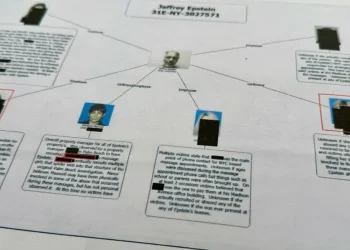
The U.S. Justice Department on Friday released thousands of documents tied to the investigation of convicted sex offender Jeffrey Epstein, following a new federal transparency law. While the release revealed images of prominent public figures and long-sealed complaints, it also prompted criticism over missed deadlines and disputed redactions, leaving survivors and lawmakers questioning whether the disclosure went far enough — or too far.
The document release marked the latest step in a legally mandated effort to make public the government’s records related to Epstein, who died in jail in 2019 while awaiting trial on federal sex trafficking charges. The files became public shortly before the weekend, immediately drawing national and international attention.
Deadline missed under transparency law
The Justice Department acknowledged that it failed to meet the statutory deadline set by the Epstein Files Transparency Act, which became law in November. The legislation required all records connected to the Epstein investigation to be released within 30 days, in a searchable format, with sensitive information redacted to protect victims.
Instead, officials said the release would occur in phases and confirmed that additional documents are expected to be made public in the coming weeks. The department did not provide a revised timeline for when the full collection would be available, nor did it detail how many files remain unreleased.
Lawmakers who supported the act said the delay undermined the purpose of the law, which was designed to address long-standing public distrust over how Epstein’s case was handled by authorities over decades.
Disputes over redactions dominate early reaction
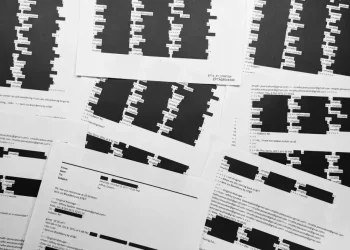
Beyond the missed deadline, the scope and consistency of redactions quickly became a focal point of criticism. Survivors’ advocates and members of Congress said the released files included hundreds of pages that were entirely blacked out, raising concerns that the Justice Department applied redactions too broadly.
The Epstein Files Transparency Act specifies that information capable of identifying victims should be redacted, while preserving as much substantive material as possible. Critics argue the released documents do not strike that balance.
At the same time, concerns were raised in the opposite direction. Gloria Allred, a prominent attorney who represents several women abused by Epstein, said she believes some materials may have been insufficiently redacted. After reviewing portions of the release, Allred said the names of some survivors appeared in the documents and should not have been disclosed.
The Justice Department has not publicly addressed the specific redaction complaints, saying only that it is reviewing feedback as additional releases are prepared.
Images of well-known figures included
Among the newly released materials were photographs depicting a range of high-profile figures, including former U.S. President Bill Clinton, actor Kevin Spacey, singer Michael Jackson, journalist Walter Cronkite, and singer and actress Diana Ross.
None of the images show sexual activity or illegal conduct. Many appear to be photographs taken at public events or social functions, showing individuals in group settings with Epstein or in related contexts.
Clinton and Spacey have previously denied any wrongdoing connected to Epstein. CNN reported that it had not received responses from Ross or from the estates of Jackson and Cronkite regarding the images included in the release.
The appearance of recognizable names in the files quickly circulated online, prompting renewed debate over the distinction between documented association and allegations of criminal conduct.
Survivors say records validate long-standing claims
For some survivors, the release carried deep emotional significance. A written complaint from 1996, included among the documents, was described by advocates as corroborating accounts that survivors have shared publicly for years.
Maria and Annie Farmer, who have long alleged abuse by Epstein, said the disclosure of the complaint confirmed that authorities were alerted to concerns decades earlier. Speaking in an interview with CNN, Annie Farmer said reading the document was overwhelming.
She said seeing the complaint in writing reinforced the belief that warning signs were known well before Epstein faced significant legal consequences, and that additional harm occurred after the complaint was filed.
Survivors’ advocates said the document underscores questions about institutional failures and missed opportunities to intervene earlier.
Broader implications for accountability
The Epstein case has long been viewed as emblematic of broader systemic failures involving wealth, power, and access to justice. Epstein’s 2008 plea deal in Florida, which allowed him to avoid federal prosecution at the time, has been widely criticized and remains under scrutiny.
Supporters of the transparency law argue that full disclosure of investigative files is essential not only for public accountability, but also for restoring trust among survivors who say their reports were ignored.
As the Justice Department prepares further releases, attention is likely to remain focused on whether future disclosures meet the law’s requirements and whether they provide clearer answers about how Epstein was able to evade serious consequences for so long.
For now, the partial release has renewed public attention on a case that continues to raise unresolved questions years after Epstein’s death.
This article was rewritten by JournosNews.com based on verified reporting from trusted sources. The content has been independently reviewed, fact-checked, and edited for accuracy, neutrality, tone, and global readability in accordance with Google News and AdSense standards.
All opinions, quotes, or statements from contributors, experts, or sourced organizations do not necessarily reflect the views of JournosNews.com. JournosNews.com maintains full editorial independence from any external funders, sponsors, or organizations.
Stay informed with JournosNews.com — your trusted source for verified global reporting and in-depth analysis. Follow us on Google News, BlueSky, and X for real-time updates.