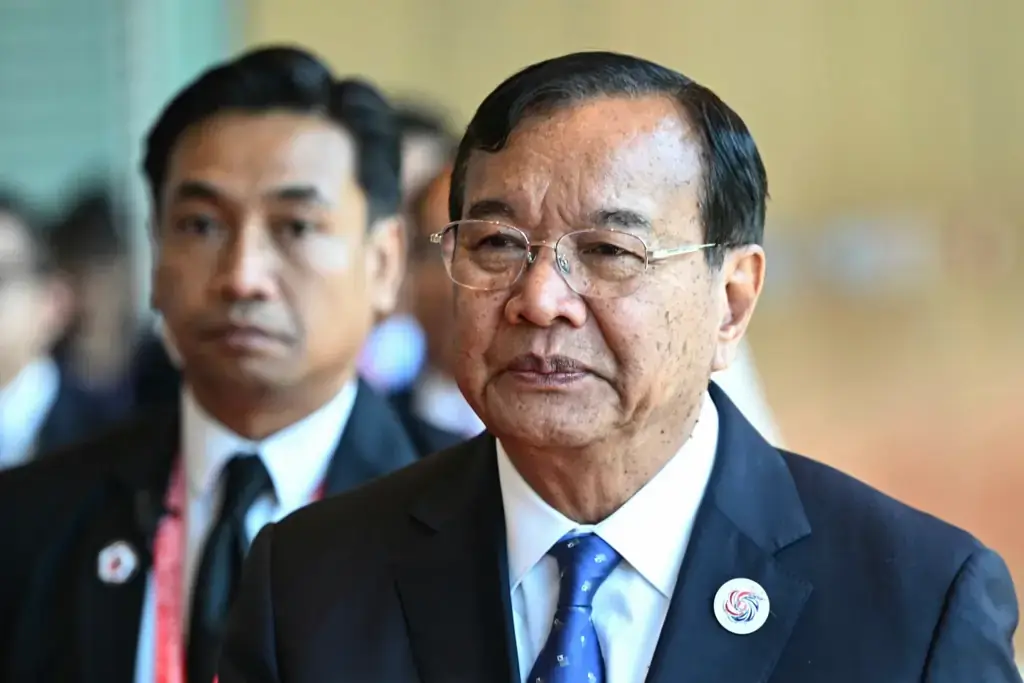
Southeast Asian foreign ministers met in Kuala Lumpur on Monday for emergency talks aimed at easing a renewed border conflict between Thailand and Cambodia that has left dozens dead and displaced hundreds of thousands. The meeting underscores mounting regional and international concern after a U.S.-backed ceasefire collapsed amid fresh fighting and mutual accusations.
Emergency ASEAN talks in Kuala Lumpur
Foreign ministers from the Association of Southeast Asian Nations (ASEAN) convened in Malaysia’s capital for a special session focused on halting hostilities between two of the bloc’s members. It marked the second time this year that ASEAN has been pressed into a mediating role as clashes along the Thai–Cambodian frontier intensify.
The talks come roughly two weeks after fighting flared again along contested stretches of the border, shattering a ceasefire that had been promoted by the United States and brokered by Malaysia. ASEAN officials have said the aim of the meeting is to restore calm, reduce the risk of further escalation, and reinforce mechanisms already agreed under previous accords.
Malaysia, which has played a central diplomatic role in recent months, is hosting the meeting amid calls for the bloc to demonstrate its relevance as a regional security forum capable of managing disputes among its members.
Ceasefire efforts and international pressure
The current round of violence has effectively undone a truce that ended five days of combat in July. That ceasefire was secured after U.S. President Donald Trump publicly threatened to withhold trade privileges unless both governments agreed to stop the fighting, according to officials familiar with the negotiations.
Malaysia facilitated the agreement, which was later formalized with more detailed provisions during an ASEAN summit held in October, also in Kuala Lumpur, attended by Trump. The accord committed both sides to de-escalation measures, including the release of detained soldiers and steps toward clearing land mines and heavy weapons from sensitive border areas.
Despite those commitments, low-level incidents and a war of words continued, setting the stage for the latest escalation in December.
Renewed fighting and humanitarian toll
The most recent clashes began on Dec. 8, a day after a border skirmish in which two Thai soldiers were wounded. Since then, combat has erupted across multiple locations along the frontier.
Thailand has acknowledged carrying out airstrikes inside Cambodian territory using F-16 fighter jets, while Cambodian forces have fired thousands of BM-21 medium-range rockets from truck-mounted launchers capable of releasing salvos of up to 40 rockets at a time.
Officials on both sides say more than two dozen people have been killed in the past week of fighting. The violence has also triggered a large humanitarian impact, with more than half a million civilians displaced from border communities, according to government figures.
Aid agencies and regional observers have warned that continued fighting could further strain local infrastructure and complicate access for humanitarian assistance in contested areas.
Thailand–Cambodia border conflict and land mine disputes
A particularly sensitive element of the dispute has been the use and presence of land mines along the frontier. Thailand has lodged multiple protests in recent days, alleging that Cambodian forces laid new anti-personnel mines that injured Thai soldiers conducting patrols.
Cambodia has rejected those claims, maintaining that any mines found in the area are remnants of its decades-long civil war, which ended in 1999 and left large swathes of the country contaminated with unexploded ordnance.
The Thai navy said on Sunday that one of its marines sustained serious injuries to his right leg after stepping on a land mine while deployed near the front line. In a separate statement, naval officials said troops had uncovered abandoned weapons and explosive ordnance in an area described as a former Cambodian stronghold, arguing the findings pointed to “deliberate planning and intentional use of anti-personnel landmines” against Thai forces.
Cambodian authorities did not immediately respond to those specific allegations.
Diplomatic exchanges and U.S. response
The fighting has drawn sharp attention from Washington. On Sunday, the U.S. Department of State issued a statement urging both governments to “end hostilities, withdraw heavy weapons, cease emplacement of landmines, and fully implement the Kuala Lumpur Peace Accords,” which include provisions to speed up humanitarian demining and address longstanding border issues.
Thai Foreign Minister Sihasak Phuangketkeow said on social media that he had spoken with U.S. Secretary of State Marco Rubio, reiterating Thailand’s intention to work toward a ceasefire and outlining what he described as a clear path forward.
Cambodia’s Foreign Minister Prak Sokhonn is expected to attend the Kuala Lumpur meeting. In a statement released Sunday, Cambodia’s foreign ministry reaffirmed its position that disputes should be resolved “through all peaceful means, dialogue and diplomacy.”
Border dispute with deep roots
At the heart of the conflict is a long-running disagreement over patches of territory along the Thai–Cambodian border, an issue that has flared periodically for decades. While both governments have previously turned to bilateral talks and international mediation, the dispute has proven resistant to permanent resolution.
ASEAN has traditionally avoided direct involvement in bilateral territorial disputes among its members, operating on principles of non-interference and consensus. However, the scale of the current fighting and its humanitarian consequences have increased pressure on the bloc to take a more active role.
Thai officials have said they will send formal letters of protest to Cambodia and to Zambia, the current chair of the Anti-Personnel Mine Ban Convention, also known as the Ottawa Convention, seeking action through the treaty’s mechanisms.
As ministers meet behind closed doors in Kuala Lumpur, regional diplomats say expectations are modest but urgent: a renewed commitment to the ceasefire, concrete steps to prevent further civilian harm, and a pathway back to negotiations before the conflict deepens further.
This article was rewritten by JournosNews.com based on verified reporting from trusted sources. The content has been independently reviewed, fact-checked, and edited for accuracy, neutrality, tone, and global readability in accordance with Google News and AdSense standards.
All opinions, quotes, or statements from contributors, experts, or sourced organizations do not necessarily reflect the views of JournosNews.com. JournosNews.com maintains full editorial independence from any external funders, sponsors, or organizations.
Stay informed with JournosNews.com — your trusted source for verified global reporting and in-depth analysis. Follow us on Google News, BlueSky, and X for real-time updates.