Why Olympic Figure Skaters Talk About Injury — And What It Reveals About Sport and the Human Body
Elite skating blends artistry with risk, offering lessons for everyday athletes
Behind the elegance of Olympic figure skating lies a constant negotiation with injury, recovery and mental strain. Physicians and performance experts working with Team USA say the lessons extend beyond elite competition — and speak to how bodies adapt, compensate and sometimes break under pressure.

When viewers watch Olympic figure skating, the first impression is often grace. Athletes glide across ice with balletic precision, landing jumps that appear effortless and lifting partners overhead while smiling. What is less visible is the physical toll of training for a sport that blends explosive power with high-impact landings on a surface that does not forgive mistakes.
Medical staff embedded with U.S. Figure Skating describe elite competition as a process of managing, rather than eliminating, injury. Gretchen Mohney, director of medical and performance services for U.S. Figure Skating, recently told the Associated Press that “no athlete at this level is 100% fully healthy.” The task, she said, is to identify what is beginning to break down and intervene before it worsens.
That framework — constant monitoring, early response, and adaptation — offers insight not only into Olympic preparation, but also into how the human body handles repeated stress.
Injury Is Managed, Not Avoided
Elite figure skating has evolved dramatically in the past two decades. The sport’s technical demands have escalated, with more skaters attempting quadruple jumps and complex lifts. Each landing generates significant force through the ankles, knees and hips. On hard ice, that force has nowhere to dissipate.
Dr. Fred Workman, a longtime team physician for U.S. Figure Skating, has noted a rise in concussions as performance difficulty increases. Falls at high velocity can lead to head impacts, and while protective measures exist, the risk cannot be eliminated entirely.




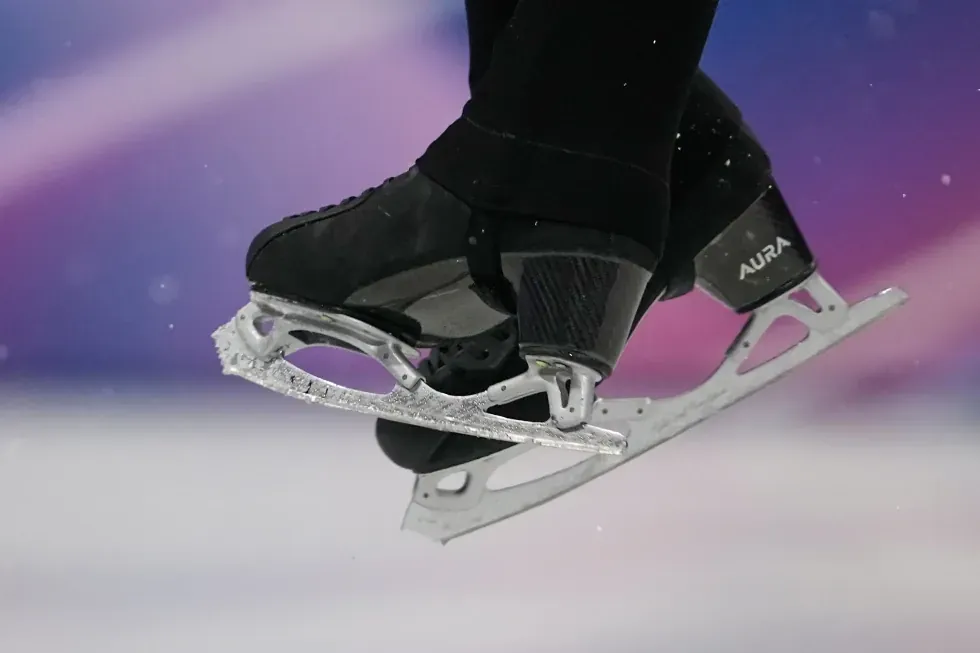
Other common injuries reflect the sport’s structure: lacerations from skate blades, overuse injuries in the lower extremities, and shoulder strain in pairs skating where men lift partners overhead while rotating. “The hard ice always wins,” Workman has observed — a blunt reminder that physics governs outcomes regardless of training level.
For elite skaters, prolonged rest is rarely an option in the lead-up to major competitions. Instead, medical teams aim to modify training loads, adjust equipment, or introduce targeted therapies to keep athletes functional while minimizing additional harm. This approach reflects a broader principle in sports medicine: optimal performance often depends on carefully calibrated compromise.
Early Warning Signs and Load Management
Mohney has outlined several red flags that medical staff monitor closely — and they mirror guidance commonly given to recreational athletes.
First, acute injuries require immediate attention. The traditional “play through it” mentality has largely been replaced in professional sports by a more preventive model. Research across athletic disciplines suggests that untreated acute injuries can cascade into chronic problems, especially when athletes alter movement patterns to avoid pain.
Second, chronic stress injuries demand modification rather than neglect. In skating, even small adjustments — such as adding padding inside boots to reduce friction — can prevent minor irritations from becoming performance-limiting injuries.
Third, loss of mobility can trigger compensation elsewhere in the body. When flexibility declines, joints and muscles adapt in ways that redistribute force. In skating, diminished hip mobility might affect jump rotation; in recreational runners, similar patterns can lead to knee or back pain. The principle is biomechanical rather than sport-specific.
Finally, overuse injuries remain pervasive. Figure skaters train year-round, repeating movements such as layback spins that involve sustained spinal extension. Without variation in intensity and volume, cumulative strain builds. Sports science research widely supports periodization — structured variation in workload — as a means of reducing injury risk while maintaining conditioning.
For weekend athletes, these concepts are not abstract. They suggest that recovery, flexibility work and training diversity are not optional extras but core components of sustainable fitness.
Concussions and the Expanding Conversation
The increase in concussion awareness across sports has shaped figure skating as well. While skating is not a contact sport, high-speed falls can produce similar neurological risks.
Recent years have seen broader adoption of concussion protocols in Olympic sports, reflecting consensus guidelines developed in international sports medicine. These emphasize immediate removal from activity, graduated return-to-play processes, and monitoring for cognitive symptoms.
The experience of skaters who have temporarily stepped away after head injuries underscores how recovery timelines vary. Age, history of prior concussions and overall health influence healing. The uncertainty inherent in brain injury management reinforces a key theme: performance gains in elite sport often carry parallel risk calculations.
Mental Resilience in a Judged Sport
Figure skating’s injury profile intersects with another defining feature: it is a judged sport. Performance evaluation depends not only on technical execution but also on interpretation and presentation. Scores may not always align with athletes’ expectations.
Workman has described part of his role as holistic, extending beyond physical diagnosis to stress management. Psychological resilience is not separate from physical recovery; it influences sleep, focus and risk-taking decisions during performance.
Athletes such as Ilia Malinin have spoken publicly about feeling overwhelmed under Olympic pressure. That acknowledgment reflects a broader cultural shift in elite sport, where mental health discussions have become more open since high-profile cases in gymnastics and tennis drew global attention.
Sports psychologists often emphasize reframing setbacks as part of development rather than as definitive failures. This perspective aligns with research suggesting that adaptive coping strategies correlate with sustained performance at elite levels.
Cross-Training the Athlete — and the Person
Both Mohney and Workman emphasize training variation. Cross-training distributes stress across muscle groups and movement patterns, potentially reducing repetitive strain. Off-ice conditioning — strength work, balance training, cardiovascular conditioning — supports stability and shock absorption during jumps.
But Workman also frames cross-training more broadly. Diversifying interests beyond sport, he argues, supports long-term well-being. Competitive careers are finite. The skills developed in sport — discipline, resilience, teamwork — have value beyond medals.
This wider lens reflects findings in athlete development research, which suggests that identity diversification can buffer against the psychological effects of injury or retirement. When sport is the sole source of self-definition, disruptions can be destabilizing.
What It Means for Everyday Athletes
The training environments of Olympians differ sharply from those of recreational athletes. They have immediate access to physicians, physical therapists and athletic trainers. Their recovery protocols are individualized and data-driven.
Yet the underlying principles are transferable:
Prompt attention to acute injuries reduces long-term damage.
Varying training intensity helps prevent overuse.
Flexibility and mobility maintenance support proper biomechanics.
Mental stress management influences physical outcomes.
These are not new ideas. They align with established guidance from sports medicine bodies and public health institutions. What Olympic skating illustrates is how visible performance often obscures invisible maintenance.
In high-performance sport, health and injury coexist in a dynamic balance. Athletes do not wait for perfect conditions; they manage imperfections strategically. That reality may challenge the romantic image of effortless grace, but it offers a more realistic understanding of human capability.
The elegance seen on Olympic ice is built not only on artistry but also on adaptation. And adaptation, as both physicians and athletes acknowledge, requires respect for the body’s limits — even when chasing extraordinary feats.
Source: AP News – Olympic figure skaters offer wellness tips for weekend athletes. The ‘hard ice always wins’