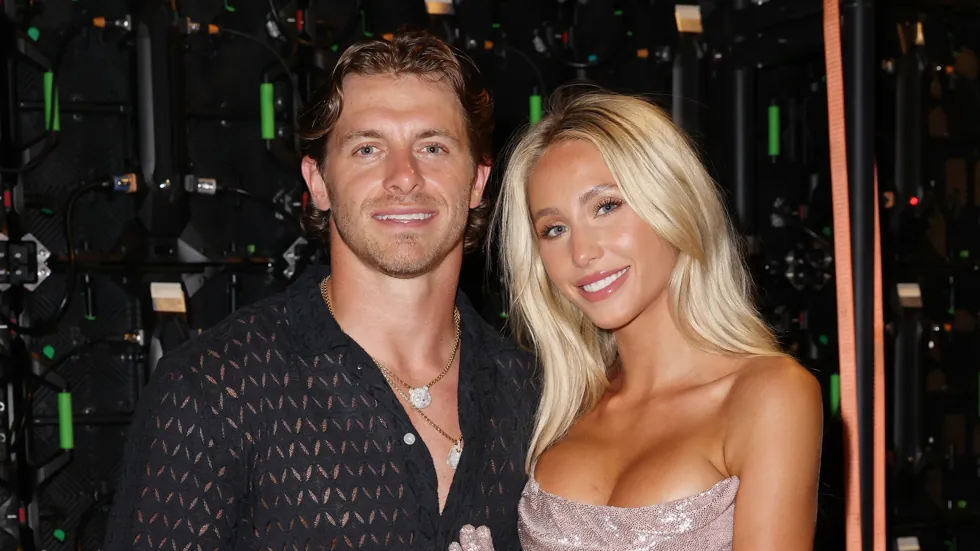
Social media personality Alix Earle has confirmed her breakup with NFL wide receiver Braxton Berrios, ending a relationship that had unfolded largely in public over the past two years. The announcement came in mid-December through a TikTok video in which Earle described the separation as amicable and rooted in diverging life paths.
Weeks later, footage circulated online showing Earle celebrating New Year’s Eve in St. Barts with former NFL quarterback Tom Brady, drawing renewed attention to the split. The sequence of events has kept the relationship timeline in focus, particularly as both figures have sizable public followings.
The breakup of Alix Earle and Braxton Berrios closes a chapter that began in early 2023, at a time when both were navigating high-profile careers and public scrutiny.

Early 2023: Relationship Begins Amid Scrutiny
Earle, 25, and Berrios, 30, began seeing each other in the spring of 2023. Their early dating period coincided with public attention surrounding Berrios’s prior relationship with model Olivia Culpo. Online speculation suggested overlapping timelines, allegations that Earle later denied during an appearance on the podcast Call Her Daddy in September 2023.
Despite initial controversy, the pair appeared to settle into a steady relationship. Earle frequently attended Miami Dolphins games and shared glimpses of their life together on social media, while Berrios occasionally posted supportive messages.
Public curiosity surrounding their relationship reflected the growing overlap between professional sports and influencer culture, where personal milestones often unfold before millions of followers.
August–November 2025: Long Distance During ‘Dancing With the Stars’
The relationship entered a new phase in August 2025 when Earle relocated temporarily to Los Angeles to compete on Dancing With the Stars. Rehearsals began in late August, marking the start of an extended period apart.
Berrios, then active in the NFL season, was unable to travel regularly. In September, Earle told People magazine that he would not attend the show’s premiere due to football commitments. She added that she hoped to visit him when possible.
■ Related News




On November 25, Earle and her professional dance partner, Val Chmerkovskiy, finished second on the program, behind winners Robert Irwin and Witney Carson. During the broadcast, a pre-recorded message from Berrios aired in which he praised her dedication and wished her luck.
While the couple continued to show public support for one another, the logistical strain of long distance appeared increasingly significant.
December 6–13, 2025: Reports and Confirmation
On December 6, People reported that the couple had separated, citing unnamed sources who described the split as mutual. In the days that followed, both Earle and Berrios addressed speculation indirectly through social media interactions.
Berrios responded to Instagram comments questioning his absence from Earle’s performances, writing that in-season travel restrictions prevented him from attending. He also dismissed suggestions that a recent caption was intended as criticism.
On December 13, Earle confirmed the breakup in a three-minute TikTok video. Speaking emotionally, she said the relationship had been “really difficult” during months of long distance and described feeling motivated by her time in Los Angeles.
“It just kind of feels like we’re on two different paths right now,” she said, emphasizing that neither party had done anything wrong. She referred to Berrios as her “best friend” and asked followers not to direct negativity toward him.
Her remarks suggested the decision was influenced largely by personal reflection and evolving priorities rather than conflict.
January 1, 2026: New Year’s Appearance With Tom Brady
Public discussion intensified on January 1, when videos circulated online showing Earle celebrating New Year’s Eve in St. Barts alongside former NFL quarterback Tom Brady. In clips widely shared on social media, the two were seen dancing and conversing during festivities.
Brady, 48, retired from professional football in 2023 after a career that included seven Super Bowl titles. He was previously married to model Gisele Bündchen.
Neither Earle nor Brady publicly commented on the nature of their New Year’s interaction. The appearance nonetheless fueled online speculation, coming less than a month after Earle’s confirmation of her split from Berrios.
Social Media and Modern Relationship Timelines
The trajectory of Alix Earle and Braxton Berrios illustrates how contemporary relationships—particularly those involving athletes and digital creators—are often documented in real time. Announcements, clarifications, and even misunderstandings unfold through TikTok videos, Instagram comments, and entertainment reporting.
In her December statement, Earle characterized the breakup as a personal turning point rather than a dramatic rupture. “It’s not drama,” she said. “It’s not because he did anything wrong or I did anything wrong.”
As of early 2026, both Earle and Berrios appear to be focusing on their respective careers. Earle continues to expand her presence across digital platforms, while Berrios remains active in professional football.
The public narrative surrounding their relationship may continue to evolve, but the core timeline—from early romance to long-distance strain and eventual separation—has now been clearly outlined by the individuals involved.
Source: Glamour – Alix Earle and Braxton Berrios: A Complete Timeline of the Breakup Drama