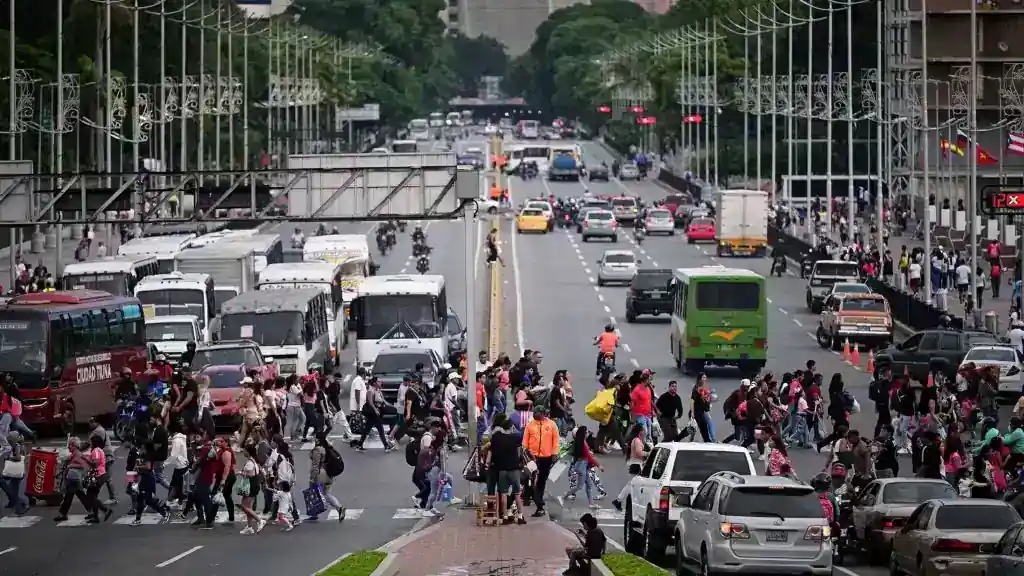
Venezuela’s streets are dressed for the holidays, but beneath the lights and music lies a growing current of unease. As tensions with the United States intensify, many Venezuelans say daily life has taken on a fragile, uncertain edge. What looks normal on the surface — open shops, schoolchildren in uniform, families preparing for Christmas — feels increasingly disconnected from the atmosphere of fear spreading across the country.
For many, the anxiety has become a constant companion. Sleepless nights, racing thoughts, and an unshakable fear of what may come next are now part of the national mood. The country has faced years of political strain, economic hardship, and mass migration. But the recent escalation in rhetoric and military posturing between Caracas and Washington has pushed many over an emotional threshold, deepening Venezuela’s anxiety crisis at a time when its population is already stretched thin.
A Season of Lights Shadowed by Fear
Victoria, a resident of western Caracas who works in commerce and lives alone since her two children migrated, says the past months have been marked by a steady rise in tension. She tries to maintain her daily routine, but the sense of looming danger, she explains, has infiltrated even the smallest parts of her day.
She often wakes up after midnight, refreshing news apps on her phone as she searches for updates about the situation. She knows the habit worsens her insomnia, but the uncertainty leaves her unable to look away. “There’s a confrontation in which we, ordinary citizens, have nothing to do,” she says. “We try to continue with our activities, but everything is interrupted by what’s happening.”
Her anxiety has reached a point where she relies on natural sleeping pills and finds herself withdrawing from conversations. Physical discomfort has accompanied the emotional weight, a combination she describes as overwhelming. “Only those of us living this can understand it,” she says.
She adds that Venezuelans are “hardworking, good-hearted people” who do not deserve the cycle of tension and instability that continues to shape their lives.
Emotional Toll Across a Divided Landscape
The mounting pressure has had visible psychological consequences across the country, according to Yorelis Acosta, a clinical and social psychologist at the Central University of Venezuela. She notes that reactions vary widely depending on geography, access to information, family circumstances, and the degree of personal exposure to government messaging or international news.
Acosta emphasizes that Venezuelans living near the borders — particularly in states like Táchira and Zulia — often feel more vulnerable due to historical tensions, smuggling corridors, and security operations in those regions. Meanwhile, those living abroad may perceive the situation differently, sometimes imagining a level of militarization that does not fully align with daily life on the ground.
The information environment also plays a major role. Some people, she says, prefer to disconnect entirely. Others remain hyperconnected, often consuming fragmented or contradictory reports that heighten feelings of fear and powerlessness. Many in the latter group suffer from insomnia and persistent anxiety.
Acosta advises moderation. “We need to stay informed, yes, but from reliable sources and for a limited time,” she explains. “We cannot spend the entire day online. We need breaks, movement, breathing, and a focus on physical and mental well-being.”
Marches, Messaging, and Contrasting Realities
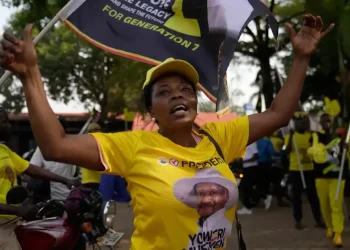
Not all Venezuelans interpret the moment through a lens of fear. At a march supporting President Nicolás Maduro on December 1, government supporter Yanitza Albarrán told CNN she believed the country remained stable and at peace. She described daily routines — teachers at work, farmers planting, merchants selling — as proof of resilience and normalcy. She praised what she called the government’s guarantee of national sovereignty.
That day, crowds marched under slogans such as “No war, yes peace,” reinforcing a message of calm and strength. While this view resonates with some sectors of society, others feel it overlooks the deeper emotional toll that months of uncertainty have created — especially as the holiday season revives memories of absent family members and long separations.
“For many, December brings hope,” Acosta notes. “For others, it is a reminder of who is missing.”
Precautionary Measures as Anxiety Rises
Fear of a potential escalation has prompted some institutions and businesses to take precautionary steps. CNN reviewed notices from private schools in Caracas instructing parents to prepare “individual emergency kits” for students. The kits include water, non-perishable food, hygiene items, medication, and flashlights — supplies traditionally associated with earthquake preparedness, but viewed by some parents as preparation for broader emergency scenarios.
Similarly, several business owners told CNN they now monitor road conditions more frequently to secure distribution routes and conduct communication drills with employees. The goal, they say, is to be ready for disruptions if tensions worsen.
These steps reflect a broader trend: uncertainty has become part of everyday planning.
A More Isolated Venezuela
Venezuela’s sense of isolation deepened in late November when several airlines halted flights to the country. The U.S. Federal Aviation Administration had urged aircraft to exercise extreme caution in Venezuelan airspace and the southern Caribbean, citing elevated risk. When carriers did not resume operations within the 48-hour period demanded by local authorities, Venezuela revoked their permits.
For many families, this was a devastating blow. Victoria says she felt “a complete collapse” after reading the news. Her daughter lives in France, and she has not seen her in two years. The suspension extinguished her hope of reuniting during the holidays, forcing her instead to explore more complicated alternatives through Colombia, Panama, or Curaçao.
“I felt like the world was crashing down on me,” she says. Travel, once merely difficult, now feels risky.
Families Forced to Choose Between Safety and Reunion
The uncertainty has also discouraged Venezuelans abroad from returning home temporarily. Luis Rosas, an engineer living in Brazil, spent weeks debating whether he should travel to Venezuela in December for his mother’s 80th birthday. Instead of excitement, he felt only doubt.
“Unfortunately, a situation like this generates anxiety, frustration, and unease,” Rosas says. “These are situations beyond one’s control, but they affect everything.”
In the end, he decided against traveling, prioritizing the safety of his son and extended family.
A Country Living Through an Unquiet Calm
Although daily routines continue, Venezuela’s collective emotional state tells a different story. With families divided across continents, a fragile economy, and geopolitical tensions raising fears of conflict, many Venezuelans describe life today as a delicate balance — outwardly calm, inwardly strained.
For now, the Christmas lights remain bright. But beneath them, the country navigates a season shaped as much by anxiety as by tradition.
This article was rewritten by JournosNews.com based on verified reporting from trusted sources. The content has been independently reviewed, fact-checked, and edited for accuracy, neutrality, tone, and global readability in accordance with Google News and AdSense standards.
All opinions, quotes, or statements from contributors, experts, or sourced organizations do not necessarily reflect the views of JournosNews.com. JournosNews.com maintains full editorial independence from any external funders, sponsors, or organizations.
Stay informed with JournosNews.com — your trusted source for verified global reporting and in-depth analysis. Follow us on Google News, BlueSky, and X for real-time updates.