Foreign Powers Accused of Fueling Sudan’s Devastating Civil War
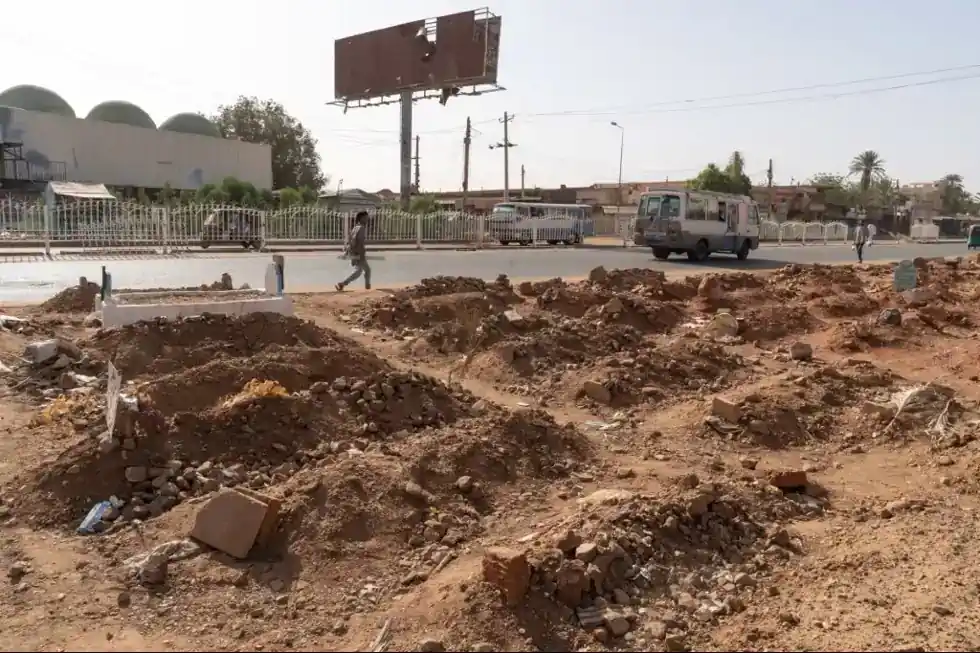
Sudan’s brutal conflict has entered its third year, leaving more than 150,000 dead and millions displaced. What began as a power struggle between two generals has evolved into a proxy battleground shaped by competing regional and international interests. Nations including the United Arab Emirates, Egypt, Saudi Arabia, and Russia have been accused of fueling the crisis — each seeking influence over one of Africa’s most strategically important nations.
The Complex Web Behind Sudan’s War
The fighting in Sudan, initially viewed as an internal clash between rival generals, has been exacerbated by outside actors. The war pits the Sudanese Armed Forces (SAF), led by General Abdel Fattah al-Burhan, against the paramilitary Rapid Support Forces (RSF), commanded by Mohamed Hamdan Dagalo, widely known as Hemedti.
The Rapid Support Forces’ recent capture of the Darfur city of El Fasher, followed by reports of mass civilian killings, drew widespread international outrage. Amid growing pressure, the RSF agreed to a humanitarian truce proposed by the “Quad” countries — the United States, United Arab Emirates, Egypt, and Saudi Arabia. However, the ceasefire has yet to halt the violence or address the deeper problem: the murky involvement of several foreign powers whose interests extend beyond Sudan’s borders.

Sudan’s geography makes it a strategic prize. The country bridges Africa and the Middle East, commands more than 500 miles of Red Sea coastline along a vital global shipping route, and holds vast gold reserves and fertile land. It also influences the flow of the Blue Nile, making it pivotal in the region’s water diplomacy.
Foreign Stakes in Sudan’s Future
According to Charles Ray, a retired U.S. diplomat and chair of the Africa Program at the Foreign Policy Research Institute, “Whoever controls Sudan is in a position to have influence in the broader region — the Horn of Africa as well as sub-Saharan Africa.” That influence has drawn in powerful regional players with competing agendas.
United Arab Emirates: Alleged Arms and Gold Connections
The United Arab Emirates has faced repeated allegations of arming Hemedti’s RSF, despite firm denials from Emirati officials. Human rights groups and UN investigators have traced weapons found in Darfur to shipments linked to companies based in the UAE.
Washington’s Treasury Department sanctioned several of these companies, saying they were tied to Hemedti and his family, including brothers Algoney and Abdul Rahim Dagalo, for providing weapons and financing the RSF through gold exports to Dubai. The UAE has dismissed the allegations as “fake news,” claiming it supports only peace and civilian rule in Sudan.
UAE adviser Anwar Gargash recently admitted that the international community made a “mistake” by not intervening more decisively when Sudan’s civilian government was toppled in 2021. Still, experts say Abu Dhabi’s ambitions go beyond stability.
■ Related News


Khalil al-Anani, a Georgetown University scholar, noted that the UAE’s interests are partly economic — targeting Sudan’s agriculture and gold — but also political. “The UAE does not want to see a successful democratic transition in Sudan,” he said, linking its actions to a broader campaign against post–Arab Spring movements.
Amnesty International and the Stockholm International Peace Research Institute have also cited Chinese-made howitzers found in Darfur that could only have been imported via the UAE, though Emirati officials dispute this. Despite repeated inquiries, the UN’s most recent report omitted specific findings about the UAE’s involvement, raising questions about diplomatic pressure behind the scenes.
Egypt: Security and the Nile Factor
Egypt, sharing deep historical and geographic ties with Sudan, has backed al-Burhan’s Sudanese Armed Forces. President Abdel Fattah el-Sisi, a former general who seized power in 2013, has provided diplomatic support to the SAF, hosting multiple meetings with Sudanese military officials and reaffirming Cairo’s commitment to Sudan’s sovereignty.
Experts say Egypt’s motives are driven by security and water politics. “Egypt is involved mainly due to national-security concerns, particularly the implications of Sudan’s instability on the Nile River,” al-Anani said. The Nile provides 90% of Egypt’s freshwater, and instability in Sudan could jeopardize Cairo’s position in its ongoing dispute with Ethiopia over the Grand Ethiopian Renaissance Dam.
Egypt also fears a democratic Sudan could embolden opposition movements at home. Moreover, the war has forced tens of thousands of Sudanese refugees into Egypt, compounding the country’s economic strain.
Saudi Arabia: Seeking Stability Along the Red Sea
Saudi Arabia has taken a more cautious approach, calling for a Sudanese-led solution and co-hosting peace talks with the United States. Nonetheless, analysts suggest Riyadh leans toward supporting al-Burhan’s military faction.
Riyadh’s key concern lies in maintaining stability along the Red Sea, a vital artery for global trade and central to Crown Prince Mohammed bin Salman’s Vision 2030 development plan. Saudi Arabia has also leveraged its position as a humanitarian actor, coordinating large-scale evacuations of civilians and foreign nationals during the early stages of the conflict.
Former U.S. diplomat Charles Ray said Riyadh’s role also reflects competition with regional powers. “There are economic benefits to being involved in Africa, but also strategic rivalry — Saudi Arabia doesn’t want to be outpaced by the UAE or Russia,” he noted.
Russia: Gold, Bases, and Wagner’s Shadow
While focused on its war in Ukraine, Russia has quietly deepened its presence in Sudan. U.S. officials accuse Moscow of “playing both sides of the conflict to advance its own political objectives.”
The Wagner Group, the now-restructured Russian mercenary network, had long provided military support to the RSF in exchange for access to Sudan’s gold mines. Wagner operatives were also accused of smuggling weapons through Libya and the Central African Republic.
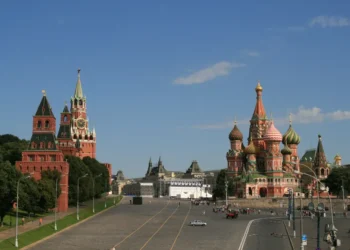
After Wagner’s failed mutiny in 2023 and the death of its leader Yevgeny Prigozhin, the Kremlin sought direct control over these operations. Meanwhile, Moscow has negotiated with al-Burhan’s government for a Red Sea naval base in Port Sudan, a move seen as part of its broader strategy to expand influence in Africa.
Sudan: A Nation Torn by Proxy Interests
Experts agree that Sudan’s conflict has evolved beyond domestic rivalry. “There is no neutral actor in the Sudanese conflict,” said al-Anani. “Every party intervenes to pursue its own goals. Controlling Sudan means controlling access to the sub-Saharan region.”
Years of war have devastated the nation’s institutions, crippled its economy, and deepened human suffering. With millions displaced and famine looming, the country remains vulnerable to manipulation by external powers that see opportunity in its instability.
Despite international mediation, Sudan’s future hinges not only on peace between its warring factions but on whether the global powers competing over its territory can restrain their ambitions long enough to let the country heal.
Source: CNN – Sudan’s bloody conflict is plagued by foreign influence – here is what we know