Journos News - Breaking News, World News, Top Stories, Todays Headlines and Flash Reports
Wednesday, September 2, 2026
  • Login
  • Home
  • World
    • Africa
    • Americas
    • Asia
    • Europe
    • Middle East
    • Oceania
  • Politics
  • Business
  • Technology
  • Health
  • Science
  • Sports
  • Entertainment
  • Culture
No Result
View All Result
  • Home
  • World
    • Africa
    • Americas
    • Asia
    • Europe
    • Middle East
    • Oceania
  • Politics
  • Business
  • Technology
  • Health
  • Science
  • Sports
  • Entertainment
  • Culture
No Result
View All Result
Journos News - Breaking News, World News, Top Stories, Todays Headlines and Flash Reports
No Result
View All Result
Home Science Life Sciences & Biology

Ancient Viral DNA in Human Genome May Influence Early Development and Evolution, New Study Finds

Research reveals that ancient viral remnants, once dismissed as “junk DNA,” play a vital role in gene regulation and human evolution.

The Daily Desk by The Daily Desk
June 23, 2026
in Life Sciences & Biology, Science
0
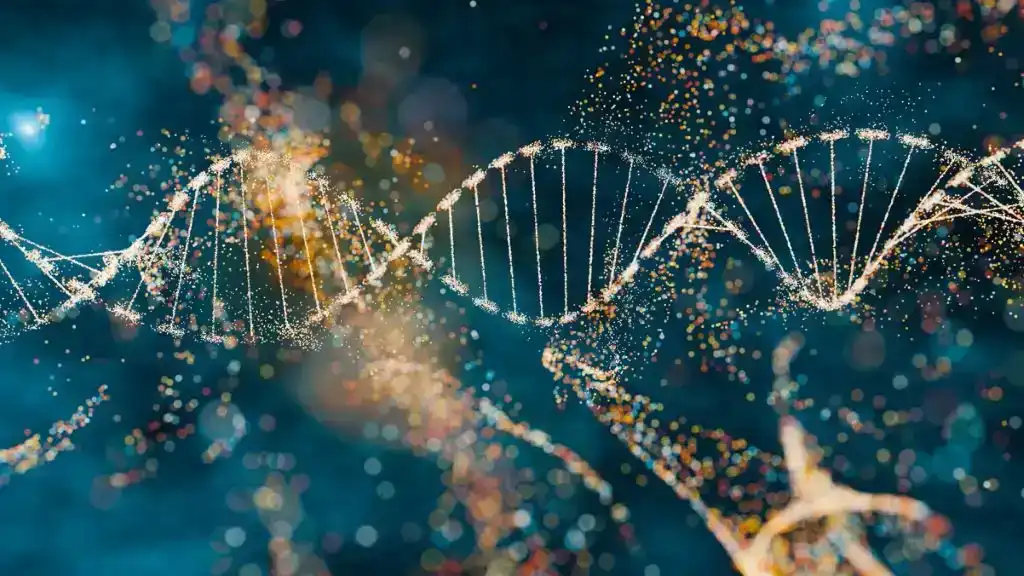
Researchers find transposable elements from ancient viruses regulate gene expression in early human development. - TanyaJoy/iStockphoto/Getty Images

Study highlights how ancient viral DNA sequences contribute to human gene regulation and evolutionary uniqueness. - TanyaJoy/iStockphoto/Getty Images

Ancient Viral DNA Plays Key Role in Human Development and Evolution, Researchers Say

Published Time: 08-10-2025, 14:00 (U.S. Eastern Time)

A new study published in Science Advances highlights the surprising role ancient viral DNA embedded in the human genome may play in early development and evolutionary processes. These viral remnants, long considered useless “junk” DNA, are now recognized as crucial components in gene regulation and could shed light on how humans evolved.

Understanding Ancient Viral DNA in the Human Genome

About 8% of the human genome consists of DNA sequences from ancient viruses that integrated into our ancestors’ chromosomes millions of years ago. These sequences reside within transposable elements (TEs), also known as “jumping genes” for their ability to move within the genome.

While TEs make up nearly half of our genetic material, they were historically overlooked as non-functional. However, recent research led by Dr. Xun Chen at the Shanghai Institute of Immunity and Infection and Dr. Fumitaka Inoue from Kyoto University has uncovered that specific TE subfamilies actively regulate gene expression, especially during early human development.

The Role of Transposable Elements in Gene Regulation

TEs have been difficult to study due to their repetitive and complex nature. The new study focused on a subset called MER11 sequences, which are found across primate genomes. Researchers discovered four previously unidentified subfamilies, including MER11_G4, which strongly activates genes in human stem cells and early neural cells.

This activation indicates that viral TEs influence how genes respond to developmental signals and environmental factors, potentially shaping the earliest stages of human growth.

Implications for Human Evolution and Disease

The study also traced how these viral sequences evolved differently among species, including humans, chimpanzees, and macaques, suggesting that viral TEs contributed to species-specific evolutionary changes.

“This research offers a new window into what makes humans unique and may help us better understand genetic diseases,” said Dr. Lin He, a molecular biologist at UC Berkeley who was not involved in the study. He emphasized that some ancient viruses have been “domesticated” by the genome to aid evolutionary innovation rather than acting solely as harmful elements.

■ Related News

No Content Available

Further, understanding TE activity could open pathways for gene therapies targeting these sequences and improve cancer treatments, as some TEs have been implicated in disease processes.

Challenges and Future Directions

Despite these advances, much remains unknown about the full extent of TE functions. Their repetitive nature complicates classification and study, and other undiscovered TEs may also play vital roles.

Dr. Steve Hoffmann, a computational biologist at the Leibniz Institute on Aging, noted that while the human genome has fewer TEs than some other species—like the Greenland shark, whose genome is over 70% jumping genes—the findings underscore the importance of these sequences across life forms.

“Studying these elements can help explain why humans develop certain diseases and lead to novel therapies,” Hoffmann said.

Conclusion

The new research reveals that ancient viral DNA embedded within human chromosomes is far from useless. Instead, these sequences actively regulate gene expression during development and have contributed to evolutionary changes that shaped modern humans.

As genomic research progresses, the functional roles of these “jumping genes” may unlock crucial insights into human biology, disease, and evolution.

Source: CNN – Ancient viral DNA may play a key role in early human development, new study suggests

Tags: #AncientViralDNA#EndogenousRetroviruses#FunctionalGenomics#GeneRegulation#GenomeInnovation#TransposableElements
The Daily Desk

The Daily Desk

The Daily Desk is a contributor at JournosNews.com covering politics, media, governance, and the evolving dynamics of public discourse. Stories published under this byline are produced in accordance with JournosNews' editorial standards, with an emphasis on verified reporting, accuracy, context, and impartiality.

Related Posts

No Content Available
Load More
Next Post
Trump plans Alaska meeting with Putin; Zelensky’s participation remains uncertain as Europe demands ceasefire and Ukraine’s active role. - Presidential Office of Ukraine/DPA/Picture Alliance/AP

White House Leaves Open Possibility of Zelensky Joining Trump-Putin Meeting in Alaska

Tammy Bruce, State Department spokeswoman and conservative author, tapped by Trump for deputy UN ambassador role in 2025. - Getty Images/BBC

Trump Nominates Tammy Bruce as U.S. Deputy Ambassador to the United Nations

JournosNews logo

Journos News delivers globally neutral, fact-based journalism that meets international media standards — clear, credible, and made for a connected world.

  • Categories
  • World News
  • Politics
  • Business & Markets
  • Technology
  • Health
  • Science
  • Sports
  • Arts & Culture
  • Resources
  • Editorial Standards
  • Submit a Story
  • Advertise with Us
  • Syndication & Partnerships
  • Site Map
  • Press & Media Kit
  • Editorial Team
  • Careers

Join thousands of readers receiving the latest updates, tips, and exclusive insights straight to their inbox. Never miss an important story again.

  • About Us
  • Editorial & Trust Center
  • Contact Us
  • Privacy Policy
  • Terms of Use & Copyright Notice

© JournosNews.com All rights reserved.

Welcome Back!

Login to your account below

Forgotten Password?

Retrieve your password

Please enter your username or email address to reset your password.

Log In
JournosNews

Independent Journalism.
Verified Facts.

You're about to read a professionally edited article from JournosNews.com.

Every article is produced in accordance with our editorial standards, emphasizing factual accuracy, transparent attribution, fairness, editorial independence, and meaningful context.

Editorial Standards
No Result
View All Result
  • Home
  • World
    • Africa
    • Americas
    • Asia
    • Europe
    • Middle East
    • Oceania
  • Politics
  • Business
  • Technology
  • Health
  • Science
  • Sports
  • Entertainment
  • Culture

© JournosNews.com All rights reserved.

This website uses cookies. By continuing to use this website you are giving consent to cookies being used. Visit our Privacy and Cookie Policy.