


Journos News - Breaking News, World News, Top Stories, Todays Headlines and Flash Reports
Tuesday, September 1, 2026
  • Login
  • Home
  • World
    • Africa
    • Americas
    • Asia
    • Europe
    • Middle East
    • Oceania
  • Politics
  • Business
  • Technology
  • Health
  • Science
  • Sports
  • Entertainment
  • Culture
No Result
View All Result
  • Home
  • World
    • Africa
    • Americas
    • Asia
    • Europe
    • Middle East
    • Oceania
  • Politics
  • Business
  • Technology
  • Health
  • Science
  • Sports
  • Entertainment
  • Culture
No Result
View All Result
Journos News - Breaking News, World News, Top Stories, Todays Headlines and Flash Reports
No Result
View All Result
Home Science

Sahara Meteorites May Be First Known Fragments from Mercury, Scientists Say

Could These Desert Rocks Be from Mercury? New Study Sparks Planetary Debate

The Daily Desk by The Daily Desk
June 24, 2026
in Science, Space & Astronomy
0
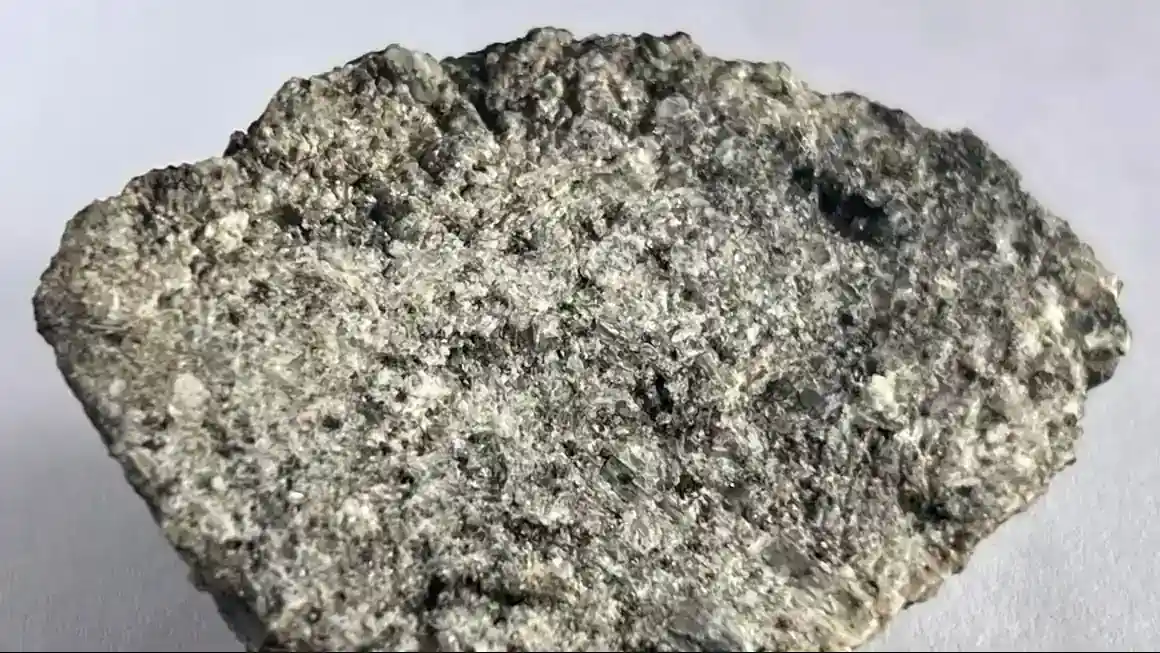
Space Rocks Discovered in Sahara Could Unlock Secrets of Mercury’s Surface - Jared Collins via CNN

New Research Suggests Mercury May Have Sent Meteorites to Earth - Jared Collins via CNN

Scientists Eye Sahara Meteorites as Possible First Fragments of Mercury

Rare Clues From the Sun’s Nearest Neighbor

Two space rocks discovered in the Sahara Desert last year could be the first confirmed meteorites from Mercury, the solar system’s least‑sampled rocky planet. Early laboratory tests suggest the specimens—cataloged as Northwest Africa 15915 (NWA 15915) and Ksar Ghilane 022 (KG 022)—share key chemical signatures with data returned by NASA’s MESSENGER orbiter. If proven, the find would give researchers their first physical window into Mercury’s makeup.

Why Mercury Samples Are So Elusive

Mercury’s proximity to the Sun makes spacecraft missions difficult and sample return missions nearly impossible. Only two probes—Mariner 10 and MESSENGER—have ever orbited the planet, and Europe’s BepiColombo will not arrive until late 2026. Unlike the Moon and Mars, which have delivered more than 1,100 recognized meteorites to Earth, Mercury has never been definitively linked to a terrestrial rock.

Chemical Fingerprints Point to the Innermost Planet

Lead author Ben Rider‑Stokes of the UK’s Open University says both Sahara meteorites contain olivine and pyroxene—iron‑poor minerals MESSENGER detected on Mercury’s crust. The samples also show an extreme scarcity of iron, matching the planet’s surface profile. Those traits separate the new finds from other Mercury contenders, such as the much‑debated NWA 7325 and a class of meteorites known as aubrites.

The Age Problem

One sticking point: radiometric dating pegs the meteorites at 4.5 billion years old, roughly half a billion years older than Mercury’s most recent surface. Rider‑Stokes argues the age gap may reflect uncertainties in MESSENGER’s crater‑counting models, not a true mismatch. Until a sample‑return mission rewrites the timeline, the debate is likely to persist.

Skepticism From MESSENGER’s Lead Scientist

Former MESSENGER principal investigator Sean Solomon remains unconvinced. He notes the age discrepancy and warns that chemically “Mercury‑like” does not automatically mean Mercurian. Still, Solomon concedes the rocks’ sulfur‑rich, iron‑poor composition could trace back to the planet’s primordial building blocks—an insight valuable even if the stones never touched Mercury’s surface.

What Comes Next

The findings, published in Icarus and up for discussion at this week’s Meteoritical Society conference in Perth, are sure to energize planetary scientists. BepiColombo’s high‑resolution instruments could soon refine Mercury’s chemical portrait, giving researchers a stronger benchmark to confirm—or refute—the Sahara candidates.

For now, the two desert meteorites remain tantalizing outliers: either the first visitors from the Sun’s scorched world, or rare relics of the material that once forged it. Either way, they promise fresh clues to the early solar system and the forces that shaped its innermost planet.

■ Related News

No Content Available

Source: CNN – Two meteorites found in the Sahara could be from the solar system’s least studied rocky planet, scientists say

Tags: #BenRiderStokesResearch#BepiColomboMission#MercuryGeology#MercuryMeteorites#MercuryPlanetStudy#MercurySurfaceClues#MESSENGERMissionData#MeteoriteAgeDebate#MeteoriteDiscovery2023#MeteoritesFromSpace#PlanetaryScienceNews#SaharaSpaceRocks
The Daily Desk

The Daily Desk

The Daily Desk is a contributor at JournosNews.com covering politics, media, governance, and the evolving dynamics of public discourse. Stories published under this byline are produced in accordance with JournosNews' editorial standards, with an emphasis on verified reporting, accuracy, context, and impartiality.

Related Posts

No Content Available
Load More
Next Post
“Trump, The Twins President”: Cantonese Opera Revives Tradition With Political Comedy - Noemi Cassanelli/CNN

Trump-Themed Cantonese Opera Draws Crowds in Hong Kong With Satirical Spin

From Multivitamins to Probiotics: A Doctor’s Guide to Smarter Supplement Use - d3sign/Moment RF/Getty Images

Are Your Supplements Safe? 5 Expert-Backed Tips to Shop Smarter

JournosNews logo

Journos News delivers globally neutral, fact-based journalism that meets international media standards — clear, credible, and made for a connected world.

  • Categories
  • World News
  • Politics
  • Business & Markets
  • Technology
  • Health
  • Science
  • Sports
  • Arts & Culture
  • Resources
  • Editorial Standards
  • Submit a Story
  • Advertise with Us
  • Syndication & Partnerships
  • Site Map
  • Press & Media Kit
  • Editorial Team
  • Careers

Join thousands of readers receiving the latest updates, tips, and exclusive insights straight to their inbox. Never miss an important story again.

  • About Us
  • Editorial & Trust Center
  • Contact Us
  • Privacy Policy
  • Terms of Use & Copyright Notice

© JournosNews.com All rights reserved.

Welcome Back!

Login to your account below

Forgotten Password?

Retrieve your password

Please enter your username or email address to reset your password.

Log In
JournosNews

Independent Journalism.
Verified Facts.

You're about to read a professionally edited article from JournosNews.com.

Every article is produced in accordance with our editorial standards, emphasizing factual accuracy, transparent attribution, fairness, editorial independence, and meaningful context.

Editorial Standards
No Result
View All Result
  • Home
  • World
    • Africa
    • Americas
    • Asia
    • Europe
    • Middle East
    • Oceania
  • Politics
  • Business
  • Technology
  • Health
  • Science
  • Sports
  • Entertainment
  • Culture

© JournosNews.com All rights reserved.

This website uses cookies. By continuing to use this website you are giving consent to cookies being used. Visit our Privacy and Cookie Policy.
