Journos News - Breaking News, World News, Top Stories, Todays Headlines and Flash Reports
Tuesday, September 1, 2026
  • Login
  • Home
  • World
    • Africa
    • Americas
    • Asia
    • Europe
    • Middle East
    • Oceania
  • Politics
  • Business
  • Technology
  • Health
  • Science
  • Sports
  • Entertainment
  • Culture
No Result
View All Result
  • Home
  • World
    • Africa
    • Americas
    • Asia
    • Europe
    • Middle East
    • Oceania
  • Politics
  • Business
  • Technology
  • Health
  • Science
  • Sports
  • Entertainment
  • Culture
No Result
View All Result
Journos News - Breaking News, World News, Top Stories, Todays Headlines and Flash Reports
No Result
View All Result
Home Science

March’s Blood Moon: Watch the Lunar Eclipse Turn the Sky Red

Total Lunar Eclipse in March: When and How to Watch

The Daily Desk by The Daily Desk
June 23, 2026
in Science, Space & Astronomy
0
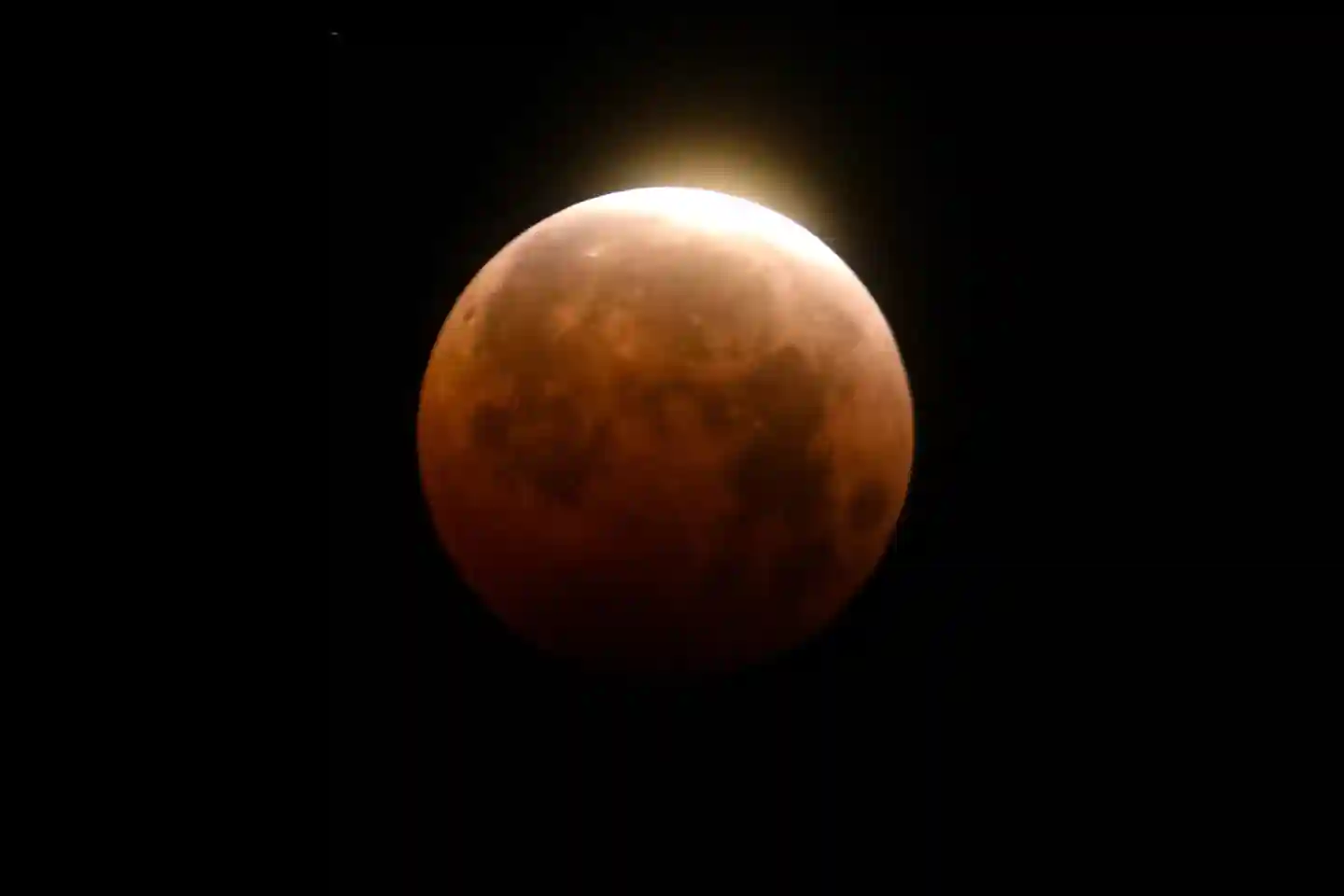
Red Moon Alert! Everything You Need to Know About the March Eclipse - Ringo H.W. Chiu/AP Photo

History, Science, and Viewing Tips for March’s Lunar Eclipse - Ringo H.W. Chiu/AP Photo

Watch the Moon Turn Red: Total Lunar Eclipse in March

A Spectacular Celestial Event

Skygazers across the Western Hemisphere are in for a treat as a total lunar eclipse is set to turn the moon red on Thursday night into early Friday morning. The best viewing locations will be in North and South America, while parts of Africa and Europe may catch a partial glimpse of this stunning phenomenon.

Lunar eclipses occur when the sun, Earth, and moon align perfectly, causing Earth to cast its shadow on the moon. During a total lunar eclipse, the full moon is completely covered by Earth’s shadow and takes on a striking coppery-red hue. This happens because some sunlight filters through Earth’s atmosphere, scattering blue light and allowing only red light to reach the moon. Partial lunar eclipses, on the other hand, create the appearance of a “bite” taken out of the moon.

According to NASA, lunar and solar eclipses occur between four to seven times a year. The last total lunar eclipse was in 2022, while a partial lunar eclipse was visible across the Americas, Africa, and Europe last September.

This “blood moon” will be visible for about an hour, starting at 2:26 a.m. Eastern on Friday, with peak viewing at around 3 a.m. Eastern. Unlike solar eclipses, no special glasses or equipment are required—just step outside and look up.

“As long as the sky is clear, you should be able to see it,” said Shannon Schmoll, director of Abrams Planetarium at Michigan State University.

However, the setting moon may make it more challenging to see the eclipse in Europe and Africa.

“This is really an eclipse for North and South America,” said Yale University astronomy expert Michael Faison.

■ Related News

Chinese EV and solar industries gain from global oil disruption - AP Photo/Ng Han Guan, File

Oil Shock Accelerates Clean Energy Shift, Strengthening China’s Manufacturing Edge

June 24, 2026
X-ray analysis reveals hidden layers in Raphael unicorn portrait - Alamy/ Galleria Borghese

Scientific Imaging Reveals Hidden Layers in Raphael Portrait’s Restoration History

June 23, 2026
Artemis II Orion capsule splashes down after lunar return mission - Bill Ingalls/NASA via AP

Artemis II Splashdown Validates NASA’s Deep-Space Systems for Future Lunar Research

June 23, 2026
Artemis II crew aboard Orion during lunar flyby systems test - AP Photo/Chris O’Meara

Artemis II Lunar Flyby Will Test Deep-Space Systems Ahead of Future Moon Landings

June 23, 2026

If you can’t catch this one, don’t worry—another total lunar eclipse will occur on September 7, visible across parts of Asia, Africa, Australia, and Europe. The Americas will have to wait until March 2026 for their next total lunar eclipse.

Lunar eclipses have fascinated civilizations for thousands of years. Ancient cultures closely observed the night sky, often attaching deep meanings to these celestial events.

Historian Zoe Ortiz of the University of North Texas noted that even early civilizations had a remarkable understanding of celestial movements. Aristotle, for example, observed that the Earth’s shadow during a lunar eclipse was always curved, providing early proof that the Earth is round.

In ancient Mesopotamia, a blood-red moon was seen as a bad omen for the king. To protect their ruler, they would install a substitute king around the time of the eclipse to absorb any misfortune.

“If there’s ever a movie plot,” Ortiz joked, “that’s the one.”

With a deep history and a breathtaking visual effect, lunar eclipses continue to captivate and inspire people around the world. Don’t miss this chance to witness one firsthand!

Source

Tags: #Astronomy#AstronomyLovers#AstronomyNews#AstroPhotography#AstroScience#BloodMoon#ScienceNews#SkyGazing#SkyWatchers#SpaceEvents#SpaceLovers#Stargazing#TotalLunarEclipse
The Daily Desk

The Daily Desk

The Daily Desk is a contributor at JournosNews.com covering politics, media, governance, and the evolving dynamics of public discourse. Stories published under this byline are produced in accordance with JournosNews' editorial standards, with an emphasis on verified reporting, accuracy, context, and impartiality.

Related Posts

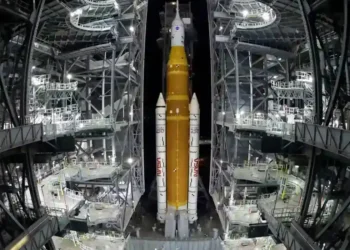
NASA rocket moved back to launch pad for Artemis II mission - AP Photo/Terry Renna

NASA resumes Artemis II preparations after repairs on Space Launch System rocket

June 23, 2026
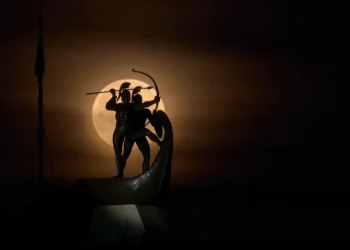
Red lunar eclipse visible across Asia and Americas sky - Petros Giannakouris/AP

Total Lunar Eclipse Colors the Moon Reddish-Orange Across Multiple Continents

June 23, 2026
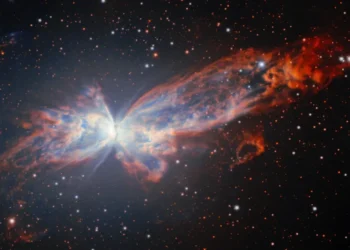
Gemini South telescope captures glowing Butterfly Nebula image - NSF NOIRLab via AP

Chile Telescope Discovery Reveals Striking New Image of Cosmic ‘Butterfly’

June 24, 2026
Orionid Meteor Shower Peaks This Week for Stargazers - Jet Propulsion Laboratory/NASA via AP, File

How to Watch the Orionid Meteor Shower This Week

June 24, 2026
October 2025 Supermoon to Shine Brighter and Larger Across the Globe - AP PHoto/Ariel Schalit

October’s First Supermoon of 2025 to Illuminate Skies Worldwide

June 24, 2026
NASA announces historic new astronaut class, selecting 10 from over 8,000 applicants for Moon and Mars exploration missions. - NASA via AP

NASA Welcomes New Astronaut Class for Moon and Mars Missions

June 23, 2026
Artificial Eclipses Offer New Window Into the Sun’s Corona - ESA/Proba-3/ASPIICS/WOW algorithm via AP

Europe Creates First Artificial Solar Eclipses Using Dual Satellites

June 24, 2026
Auroras on the Move: Where to See the Northern Lights Tonight - Image credit: Noppawat Tom Charoensinphon via Getty Images

Sky Show Tonight: Solar Storm Could Bring Auroras to Much of the U.S.

June 23, 2026
Load More
Next Post
From War to Unity? Syria’s New Government Faces Tough Challenges - Omar Sanadiki/AP Photo

Syria’s Uncertain Future: A Week of Violence and Diplomacy

Say Goodbye to Shoulder Stiffness with These Simple Moves - Aaron Lockwood/CNN

Why Shoulder Stretching Doesn’t Work—And What to Do Instead

JournosNews logo

Journos News delivers globally neutral, fact-based journalism that meets international media standards — clear, credible, and made for a connected world.

  • Categories
  • World News
  • Politics
  • Business & Markets
  • Technology
  • Health
  • Science
  • Sports
  • Arts & Culture
  • Resources
  • Editorial Standards
  • Submit a Story
  • Advertise with Us
  • Syndication & Partnerships
  • Site Map
  • Press & Media Kit
  • Editorial Team
  • Careers

Join thousands of readers receiving the latest updates, tips, and exclusive insights straight to their inbox. Never miss an important story again.

  • About Us
  • Editorial & Trust Center
  • Contact Us
  • Privacy Policy
  • Terms of Use & Copyright Notice

© JournosNews.com All rights reserved.

Welcome Back!

Login to your account below

Forgotten Password?

Retrieve your password

Please enter your username or email address to reset your password.

Log In
JournosNews

Independent Journalism.
Verified Facts.

You're about to read a professionally edited article from JournosNews.com.

Every article is produced in accordance with our editorial standards, emphasizing factual accuracy, transparent attribution, fairness, editorial independence, and meaningful context.

Editorial Standards
No Result
View All Result
  • Home
  • World
    • Africa
    • Americas
    • Asia
    • Europe
    • Middle East
    • Oceania
  • Politics
  • Business
  • Technology
  • Health
  • Science
  • Sports
  • Entertainment
  • Culture

© JournosNews.com All rights reserved.

This website uses cookies. By continuing to use this website you are giving consent to cookies being used. Visit our Privacy and Cookie Policy.